




Si 1985 fue la consolidación, 1986 fue el año del Apocalipsis Sónico. Para cualquier estudioso del metal extremo, este año representa el «cénit» absoluto del Thrash y el nacimiento definitivo de las ramificaciones más violentas del género. Fue el año en que las bandas dejaron de pedir permiso y decidieron ver qué tan lejos podían llevar la velocidad, el odio y la técnica.
Como cronista de esta evolución, considero que 1986 es la frontera definitiva: después de estos lanzamientos, el metal nunca volvió a ser «solo música»; se convirtió en un asalto sensorial.
Slayer – «Reign in Blood»
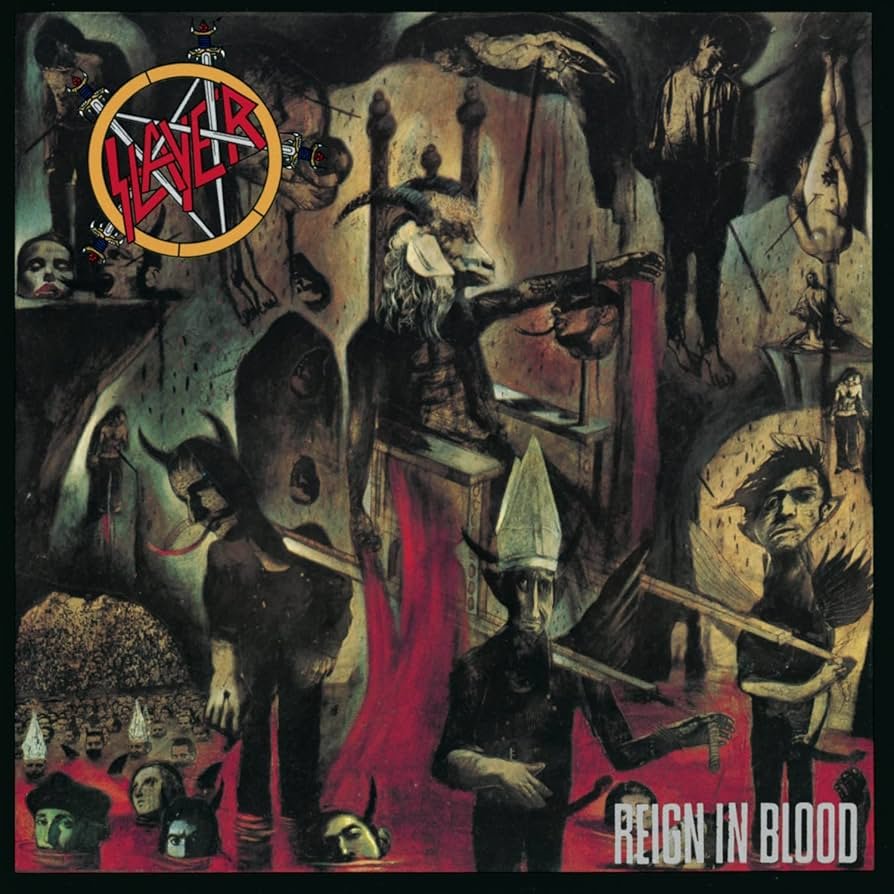
Sonido y Producción: Para mí, este es el disco perfecto. Rick Rubin despojó a Slayer de la reverberación cavernosa de sus inicios y les dio un sonido seco, directo y quirúrgico. La batería de Dave Lombardo suena como ametralladoras y las guitarras son cuchillas. En apenas 29 minutos, Slayer redefinió lo que significaba la palabra «extremo». La producción es tan nítida que cada nota de esa velocidad absurda se clava en el cráneo.
Crítica del Momento: Fue un terremoto. La crítica profesional estaba aterrorizada (especialmente por la letra de «Angel of Death»), mientras que los fans sabían que estaban ante la cumbre del Thrash. Fue el disco que separó a los hombres de los niños en la escena extrema.
Metallica – «Master of Puppets»
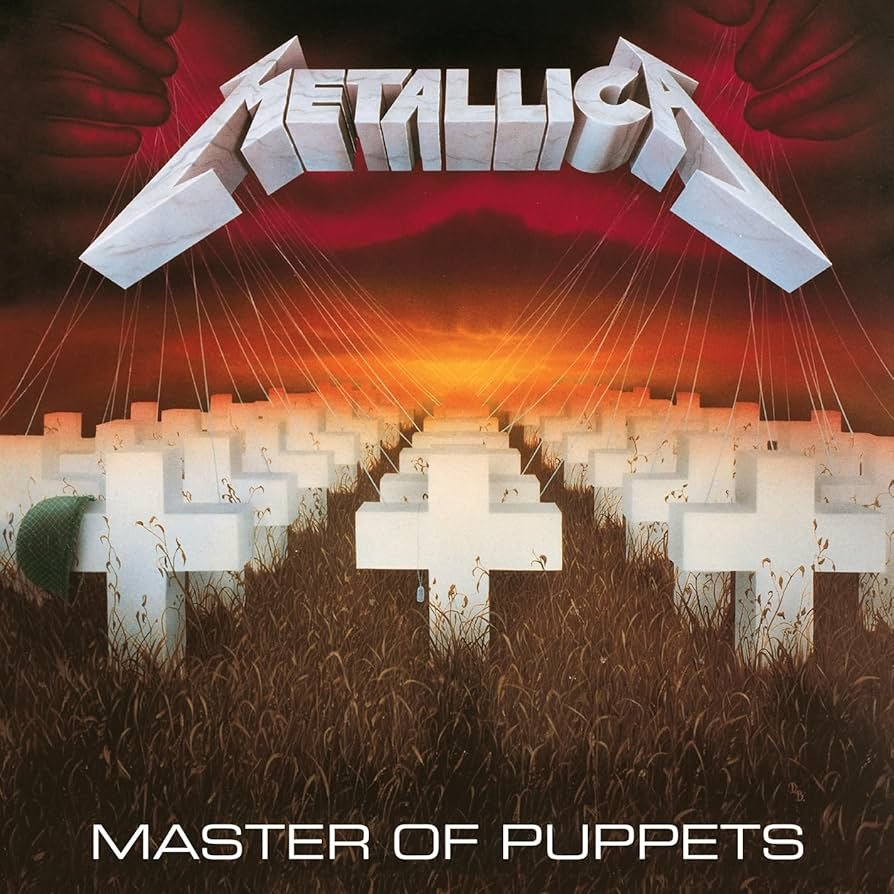
Sonido y Producción: La perfección técnica. Bajo la producción de Flemming Rasmussen, Metallica logró un sonido denso, épico y masivo. Aunque es menos «sucio» que otros en esta lista, su agresividad reside en la estructura y la potencia rítmica. Los riffs de James Hetfield son muros de hormigón. Es el equilibrio ideal entre la complejidad progresiva y la furia del thrash.
Crítica del Momento: Recibido con una aclamación casi universal. Se le consideró instantáneamente una obra maestra, no solo del metal, sino de la música contemporánea. Para muchos de nosotros en la época, fue la prueba de que el metal extremo podía ser inteligente y ambicioso sin perder su fuerza.
Kreator – «Pleasure to Kill»
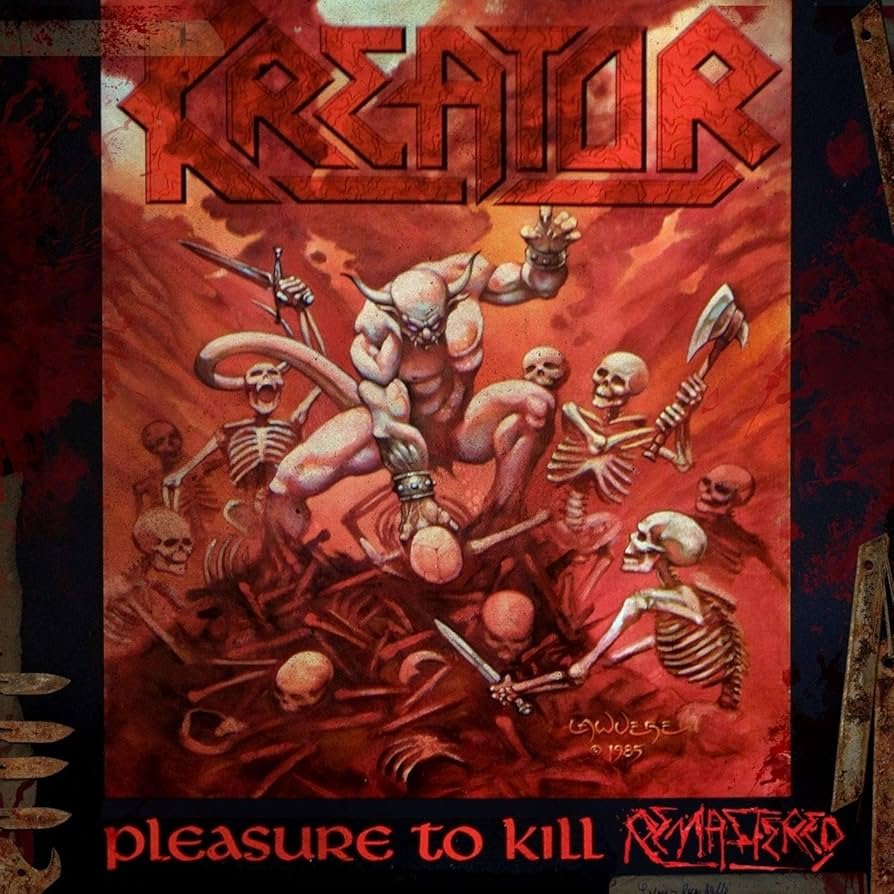
Sonido y Producción: Si Slayer era quirúrgico, Kreator era un carnicero con una motosierra. La producción es caótica, ruidosa y visceral. Este disco es uno de los pilares del Death/Thrash. El sonido es un ataque de pánico constante; la voz de Mille Petrozza suena como si estuviera siendo poseído. Es el disco más violento salido de Europa ese año.
Crítica del Momento: En el underground fue un culto inmediato. Se decía que era «demasiado rápido para ser humano». Fue fundamental para que el metal europeo dejara de mirar a EE. UU. y empezara a dictar sus propias reglas de brutalidad.
Dark Angel – «Darkness Descends»
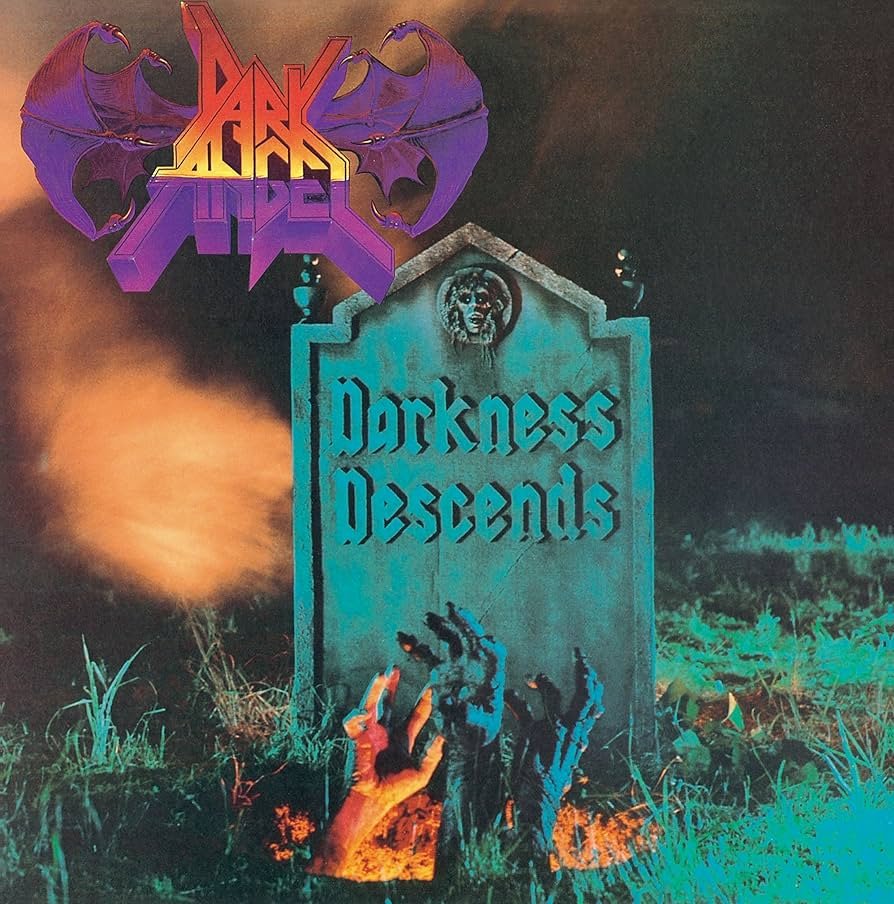
Sonido y Producción: A menudo comparado con «Reign in Blood», pero con una densidad de notas aún mayor. La producción es cruda y enfocada en la batería de Gene Hoglan (el «reloj de arena»). Es un disco sofocante por su velocidad y la cantidad de riffs por segundo. Es Thrash llevado al límite del agotamiento físico.
Crítica del Momento: Se le apodó el «L.A. Caffeine Machine». Los críticos se maravillaron con la resistencia de la banda. Para mí, es el eslabón perdido entre el thrash más rápido y lo que pronto conoceríamos como el death metal técnico.
Sepultura – «Morbid Visions»
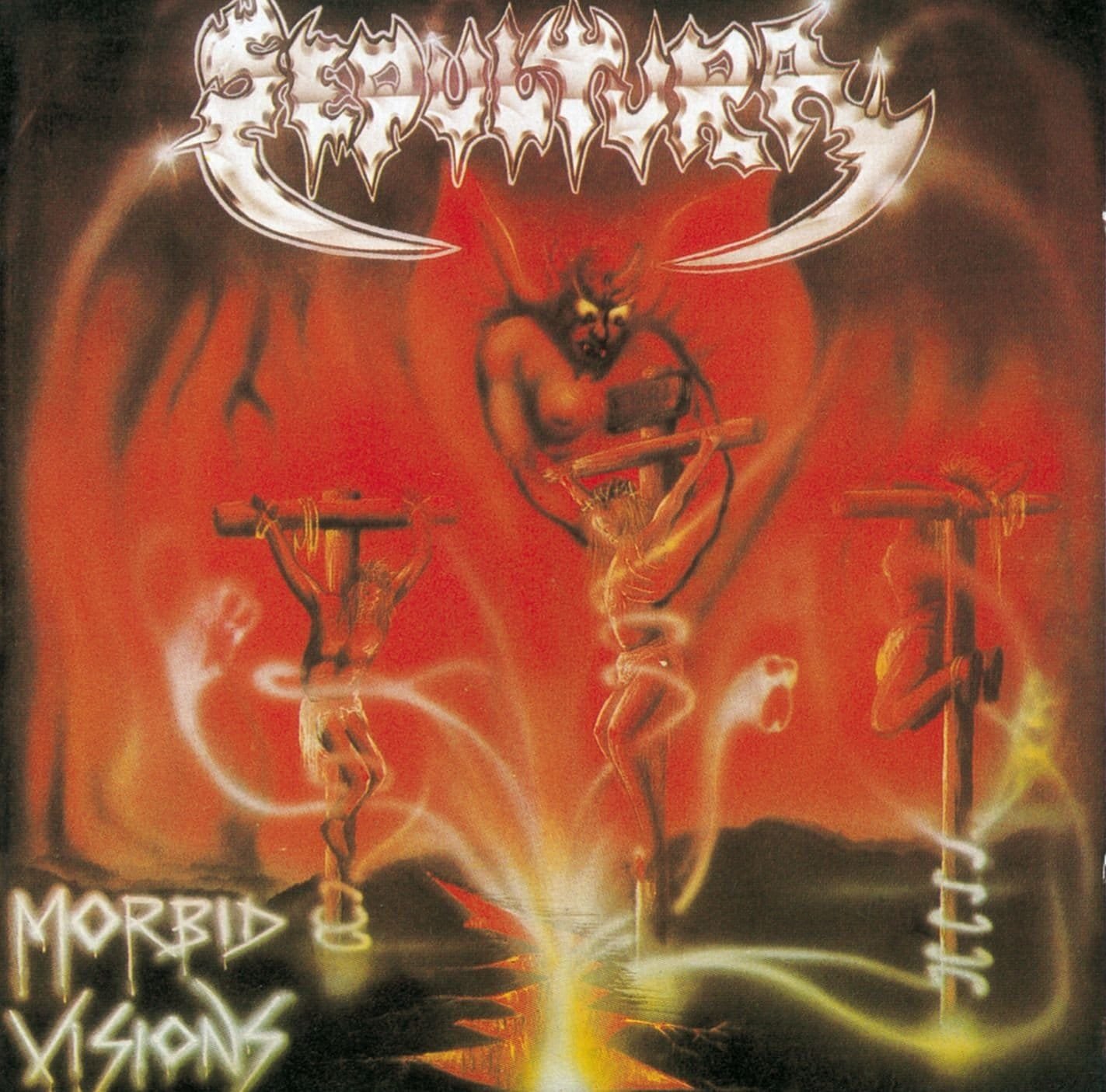
Sonido y Producción: Grabado en condiciones precarias en Brasil, la producción es atroz desde un punto de vista técnico, pero legendaria desde un punto de vista atmosférico. Guitarras desafinadas, batería primitiva y una reverberación que parece grabada en una cripta. Este es el sonido del Black/Death en su estado más puro y desesperado.
Crítica del Momento: Prácticamente ignorado por la prensa grande, pero una joya absoluta para los que intercambiábamos cintas (tape-trading). Fue la prueba de que el tercer mundo tenía una rabia que Europa y EE. UU. no podían replicar.
Megadeth – «Peace Sells… but Who’s Buying?»
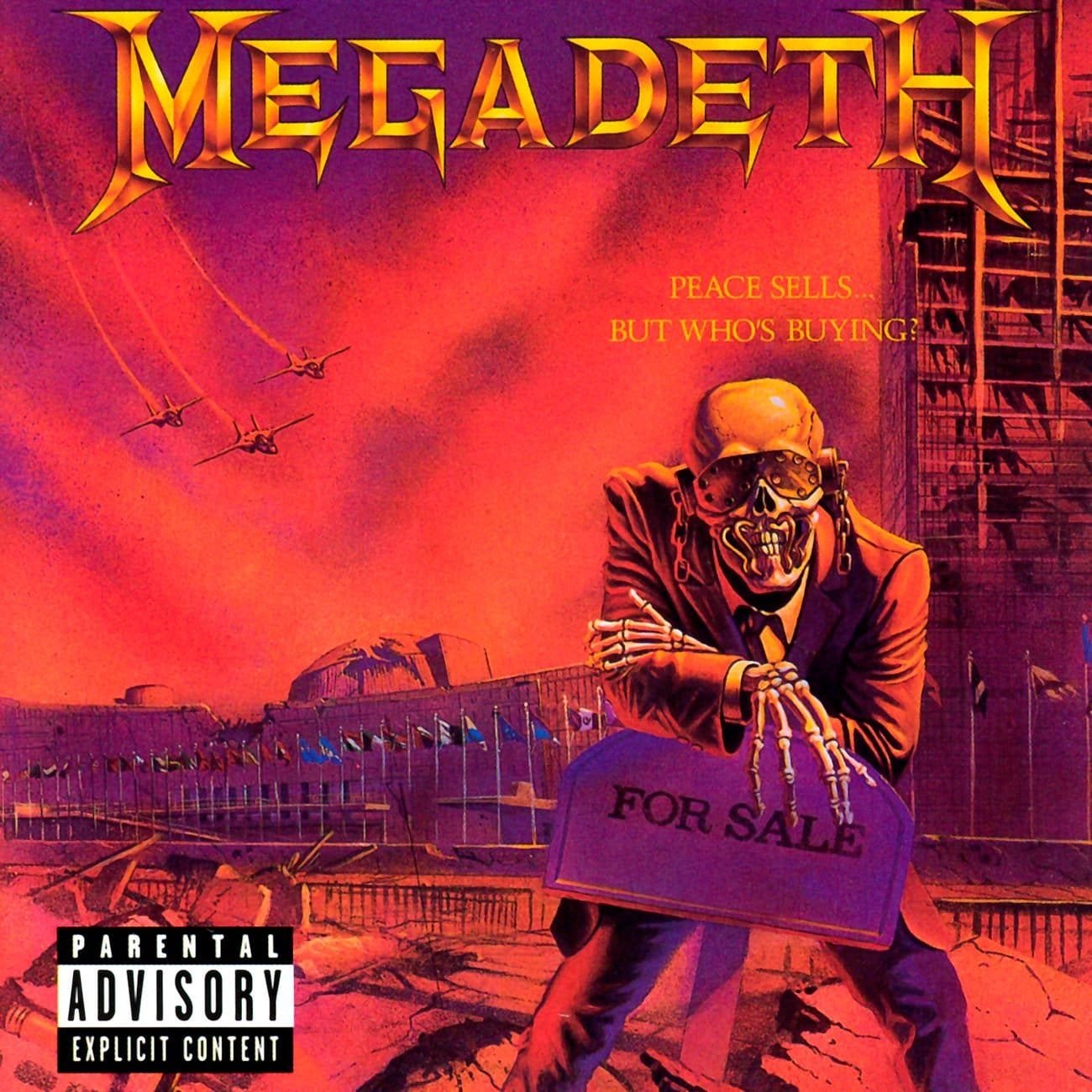
Sonido y Producción: Aquí Dave Mustaine perfeccionó su visión. La producción es mucho más profesional y nítida que en su debut. El bajo de David Ellefson tiene un protagonismo inusual en el metal extremo de la época. Es un disco de Thrash altamente técnico, cínico y lleno de solos de guitarra que parecen duelos a muerte.
Crítica del Momento: Fue la consagración de Megadeth. La crítica alabó la complejidad de las composiciones y la inteligencia de las letras. Demostró que se podía ser extremo siendo un virtuoso del instrumento.
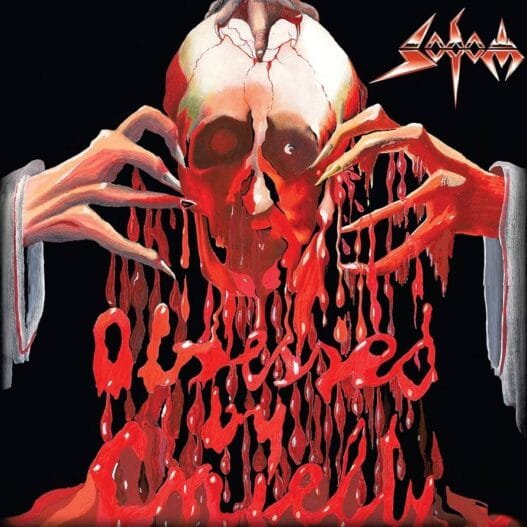
Sodom – «Obsessed by Cruelty»
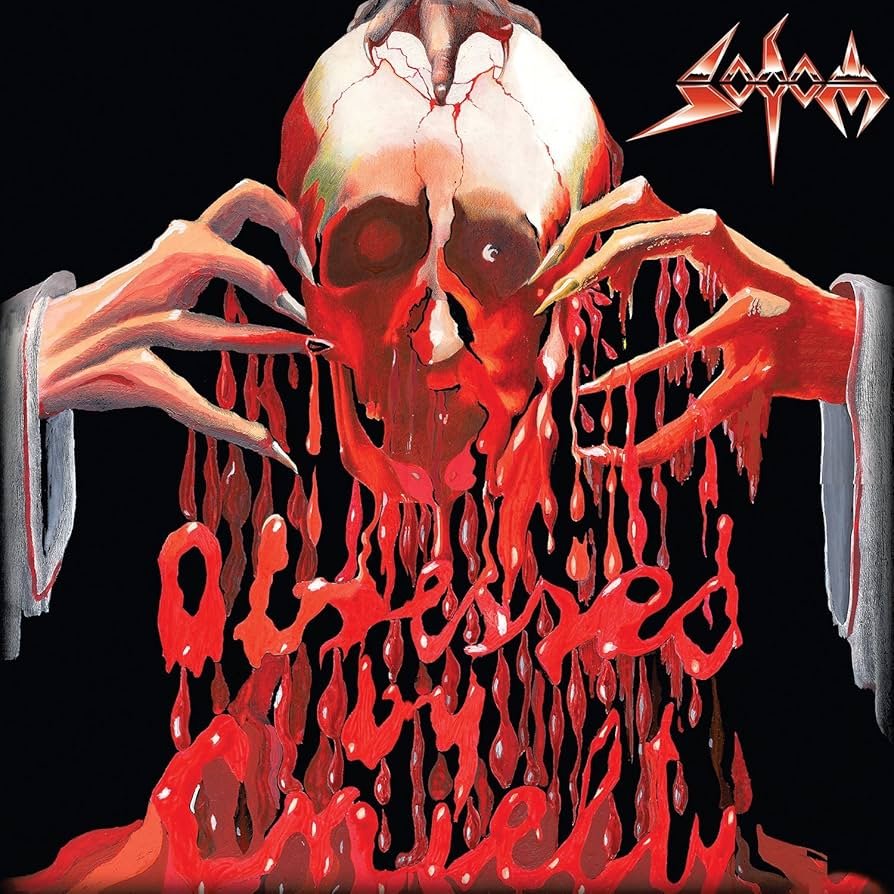
Sonido y Producción: (Existen dos versiones, pero me centro en la visión general). Es un disco sucio, blasfemo y desordenado. La producción es intencionadamente primitiva. Junto a Bathory, Sodom estaba sentando las bases del Black Metal de la segunda ola. El sonido es una mezcla de velocidad incontrolada y una atmósfera de maldad absoluta.
Crítica del Momento: La prensa técnica lo odió por su «falta de habilidad», pero para la escena extrema, era oro. Su influencia en el black metal noruego que vendría años después es incalculable.
Possessed – «Beyond the Gates»
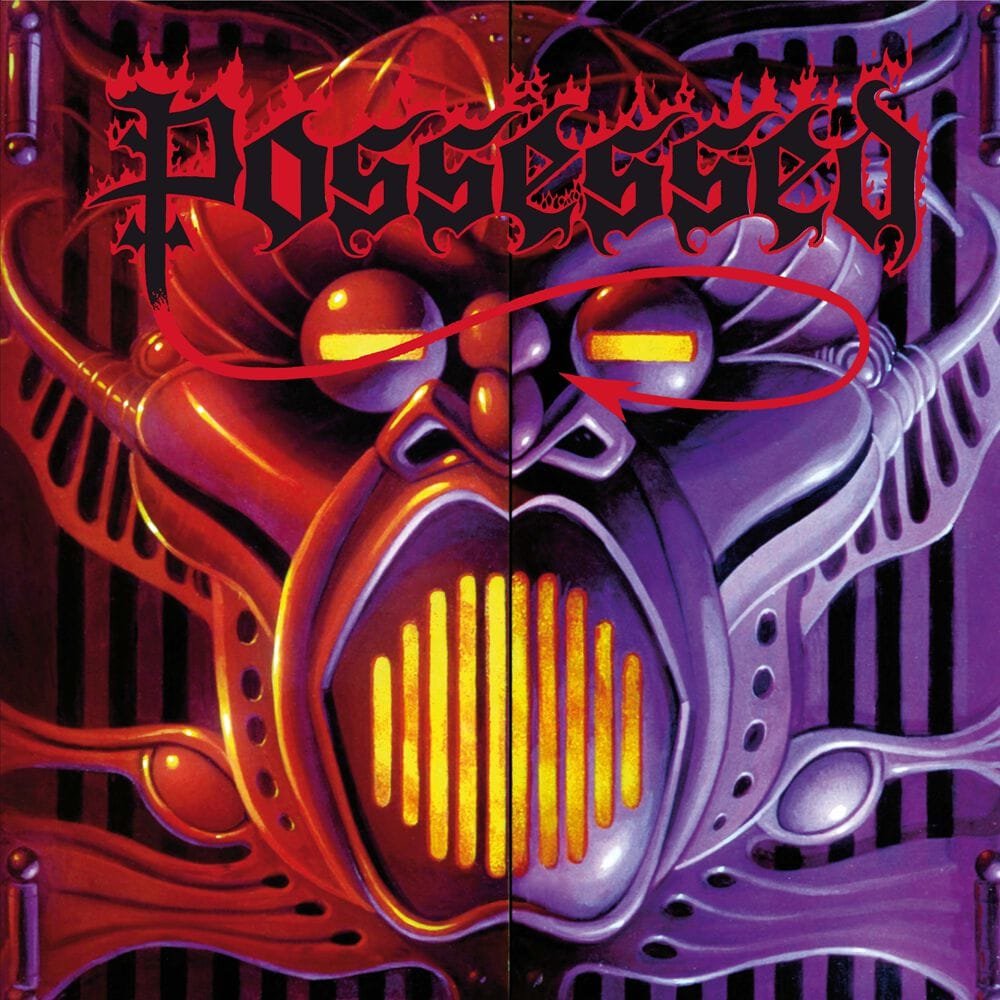
Sonido y Producción: Tras el impacto de su debut, regresaron con una producción un poco más limpia (a cargo de Carl Canedy), lo cual fue polémico. El sonido es menos «caótico» pero más técnico. Siguieron explorando las estructuras que separaban al thrash del Death Metal, con riffs cromáticos y voces demoníacas.
Crítica del Momento: No tuvo el impacto sísmico del primero, pero se valoró su intento de profesionalizar el sonido del Death Metal. Para mí, es un disco de transición necesario que muestra cómo el género buscaba su propia identidad sonora.
Onslaught – «The Force»
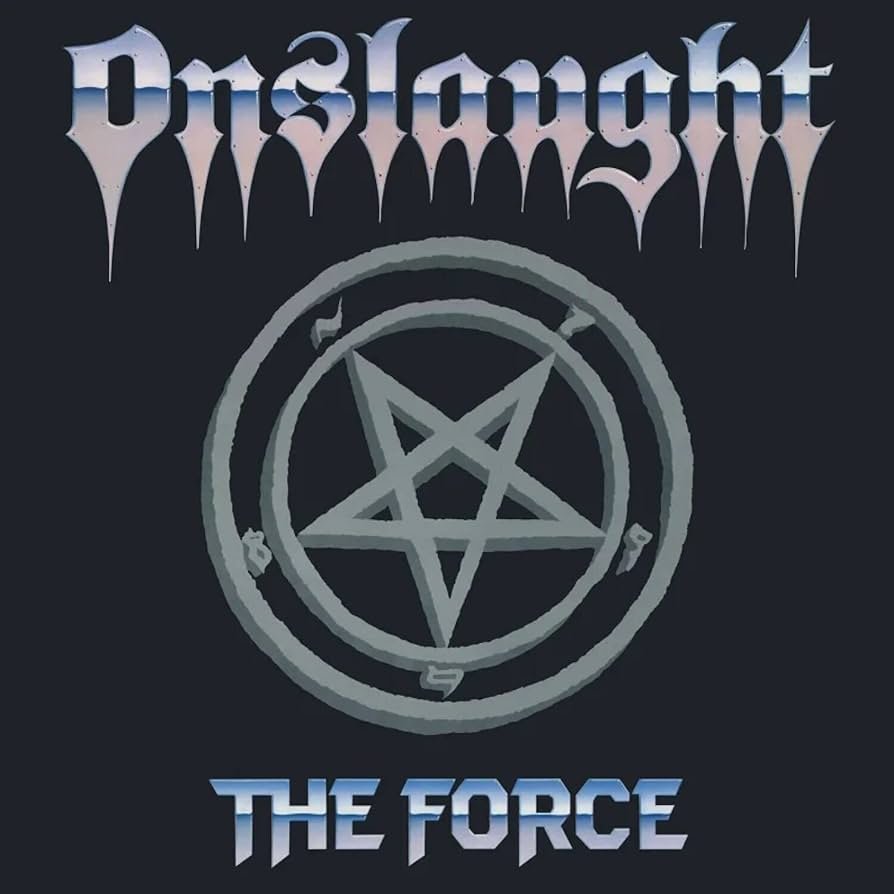
Sonido y Producción: Desde el Reino Unido, Onslaught pasó del punk/hardcore a un Thrash Metal masivo y satánico. La producción es potente, muy influenciada por el sonido de la NWOBHM pero con la mala leche del thrash americano. Los riffs son épicos y la voz de Sy Keeler aportó una agresividad que la escena británica necesitaba desesperadamente.
Crítica del Momento: Fue la respuesta británica a Slayer y Metallica. Se le consideró un hito en la escena europea, demostrando que en las islas también se podía cocinar metal de altísima velocidad y temática oscura.
Vulcano – «Bloody Vengeance»
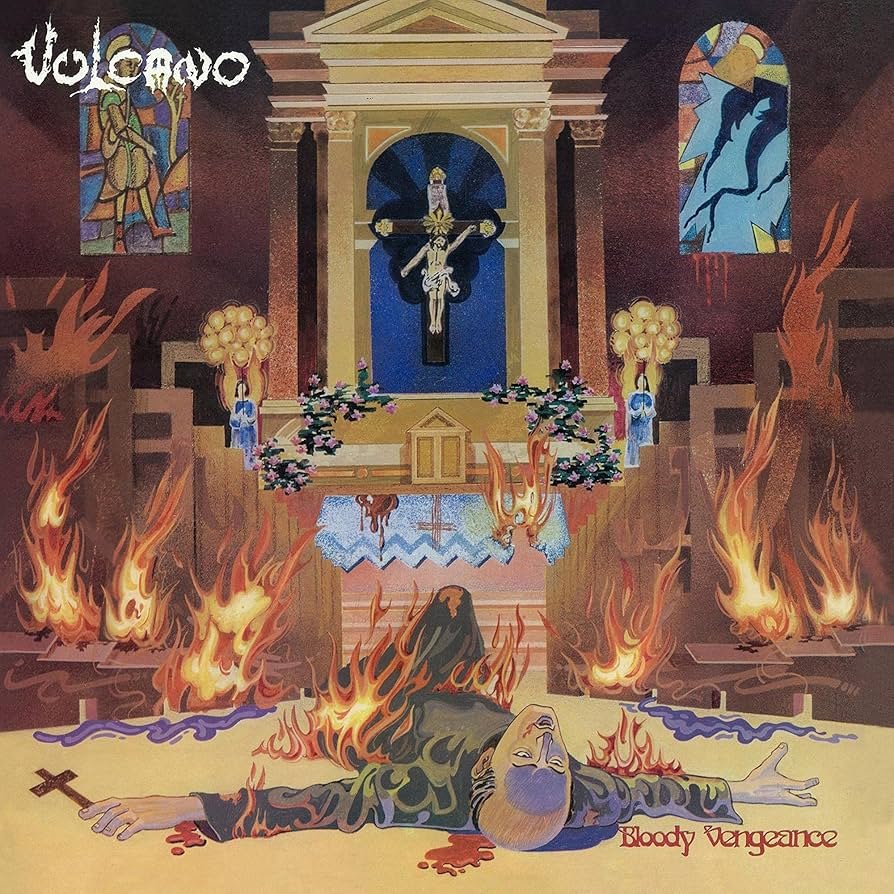
Sonido y Producción: Otro titán brasileño. Si Sepultura era el caos, Vulcano era la oscuridad. La producción es mínima, cruda y violenta. Es un híbrido de Black, Death y Thrash que suena como un ritual prohibido. La voz es un gruñido ancestral. Es la máxima expresión del metal extremo sudamericano de ese año.
Crítica del Momento: Un disco de culto total. En 1986, si tenías una copia de este disco, eras el rey del underground. Su sonido primitivo fue una influencia directa en bandas como Mayhem o Darkthrone años después.
Para mí, 1986 es el año en que el metal extremo alcanzó la mayoría de edad. No solo hubo más discos, sino que hubo mejores discos. La producción dejó de ser un accidente para convertirse en una herramienta de agresión consciente. Sin estos diez álbumes, el metal extremo que escuchamos hoy simplemente no existiría.
If 1985 was the consolidation, 1986 was the year of the «Sonic Apocalypse.» For any scholar of extreme metal, this year represents the absolute «cénit» of Thrash and the definitive birth of the genre’s most violent offshoots. It was the year when bands stopped asking for permission and decided to see just how far they could push speed, hatred, and technique.
As a chronicler of this evolution, I consider 1986 to be the ultimate frontier: after these releases, metal was never «just music» again; it became a sensory assault
Slayer – «Reign in Blood»
Sound and Production: For me, this is the perfect record. Rick Rubin stripped Slayer of the cavernous reverb of their early days and gave them a dry, direct, and surgical sound. Dave Lombardo’s drumming sounds like machine guns and the guitars are blades. In just 29 minutes, Slayer redefined what the word «extreme» meant. The production is so crisp that every note of that absurd speed is driven into the skull.
Contemporary Critique: It was an earthquake. Professional critics were terrified (especially by the lyrics of «Angel of Death»), while fans knew they were witnessing the peak of Thrash. It was the album that separated the men from the boys in the extreme scene.
Metallica – «Master of Puppets»
Sound and Production: Technical perfection. Under the production of Flemming Rasmussen, Metallicaachieved a dense, epic, and massive sound. Although it is less «dirty» than others on this list, its aggressiveness lies in its structure and rhythmic power. James Hetfield’s riffs are concrete walls. It is the ideal balance between progressive complexity and thrash fury.
Contemporary Critique: Received with almost universal acclaim. It was instantly considered a masterpiece, not just of metal, but of contemporary music. For many of us at the time, it was proof that extreme metal could be intelligent and ambitious without losing its strength.
Kreator – «Pleasure to Kill»
Sound and Production: If Slayer was surgical, Kreator was a butcher with a chainsaw. The production is chaotic, noisy, and visceral. This album is one of the pillars of Death/Thrash. The sound is a constant panic attack; Mille Petrozza’s voice sounds as if he were being possessed. It is the most violent record to come out of Europe that year.
Contemporary Critique: In the underground, it became an immediate cult classic. It was said to be «too fast to be human». It was fundamental in making European metal stop looking toward the US and start dictating its own rules of brutality.
Dark Angel – «Darkness Descends»
Sound and Production: Often compared to «Reign in Blood», but with an even greater density of notes. The production is raw and focused on the drumming of Gene Hoglan (the «sand watch»). It is a suffocating album due to its speed and the number of riffs per second. It is Thrash pushed to the limit of physical exhaustion.
Contemporary Critique: It was nicknamed the «L.A. Caffeine Machine». Critics marveled at the band’s endurance. For me, it is the missing link between the fastest thrash and what we would soon know as technical death metal.
Sepultura – «Morbid Visions»
Sound and Production: Recorded under precarious conditions in Brazil, the production is atrocious from a technical standpoint but legendary from an atmospheric one. Out-of-tune guitars, primitive drumming, and a reverb that sounds like it was recorded in a crypt. This is the sound of Black/Death in its purest and most desperate state.
Contemporary Critique: Practically ignored by the mainstream press, but an absolute gem for those of us involved in «tape-trading». It was proof that the third world had a rage that Europe and the US could not replicate.
Megadeth – «Peace Sells… but Who’s Buying?»
Sound and Production: Here, Dave Mustaine perfected his vision. The production is much more professional and sharp than on their debut. David Ellefson’s bass has an unusual prominence in the extreme metal of the time. It is a highly technical Thrash record, cynical and full of guitar solos that feel like duels to the death.
Contemporary Critique: It was the consolidation of Megadeth. Critics praised the complexity of the compositions and the intelligence of the lyrics. It proved that one could be extreme while being a virtuoso of the instrument.
Sodom – «Obsessed by Cruelty»
Sound and Production: (Two versions exist, but I focus on the general vision). It is a dirty, blasphemous, and messy record. The production is intentionally primitive. Alongside Bathory, Sodom was laying the foundations for second-wave Black Metal. The sound is a mixture of uncontrolled speed and an atmosphere of absolute evil.
Contemporary Critique: The technical press hated it for its»lack of skill», but for the extreme scene, it was gold. Its influence on the Norwegian black metal that would come years later is incalculable.
Possessed – «Beyond the Gates»
Sound and Production: Following the impact of their debut, they returned with a slightly cleaner production (handled by Carl Canedy), which was controversial. The sound is less «chaotic» but more technical. They continued exploring the structures that separated thrash from Death Metal, with chromatic riffs and demonic vocals.
Contemporary Critique: It didn’t have the seismic impact of the first one, but its attempt to professionalize the Death Metal sound was valued. For me, it is a necessary transitional record that shows how the genre was searching for its own sonic identity.
Onslaught – «The Force»
Sound and Production: From the UK, Onslaught moved from punk/hardcore to a massive and Satanic Thrash Metal. The production is powerful, heavily influenced by the NWOBHM sound but with the «bad blood» of American thrash. The riffs are epic, and Sy Keeler’s vocals brought an aggressiveness that the British scene desperately needed.
Contemporary Critique: It was the British response to Slayer and Metallica. It was considered a milestone in the European scene, proving that the islands could also cook up high-speed metal with dark themes.
Vulcano – «Bloody Vengeance»
Sound and Production: Another Brazilian titan. If Sepultura was chaos, Vulcano was darkness. The production is minimal, raw, and violent. It is a hybrid of Black, Death, and Thrash that sounds like a forbidden ritual. The vocals are an ancestral grunt. It is the ultimate expression of South American extreme metal from that year.
Contemporary Critique: A total cult record. In 1986, if you had a copy of this album, you were the king of the underground. Its primitive sound was a direct influence on bands like Mayhem or Darkthrone years later.
For me, 1986 is the year extreme metal came of age. Not only were there more records, but there were better records. Production stopped being an accident and became a tool for conscious aggression. Without these ten albums, the extreme metal we listen to today simply would not exist.