





(English Below)
Ficha Técnica
Artista: Cogadh
Álbum: «Kingmaker»
Sello: Independiente
Fecha de lanzamiento: 6 de marzo de 2026
Género: Black Metal
Para fans de: Taake | Darkthrone | Havukruunu | Drudkh | Kampfar
Hay discos debut que funcionan como una simple carta de presentación, y luego están aquellos que, desde el primer contacto, dejan claro que la banda tiene una visión muy definida y una ambición que va más allá de cumplir con los códigos del género. «Kingmaker», el primer álbum de larga duración de Cogadh, pertenece claramente a este segundo grupo. No es solo un álbum de black metal bien ejecutado: es una obra que entiende la tradición, la respeta y, al mismo tiempo, se permite expandirla con personalidad, identidad cultural y una narrativa sonora muy bien construida.
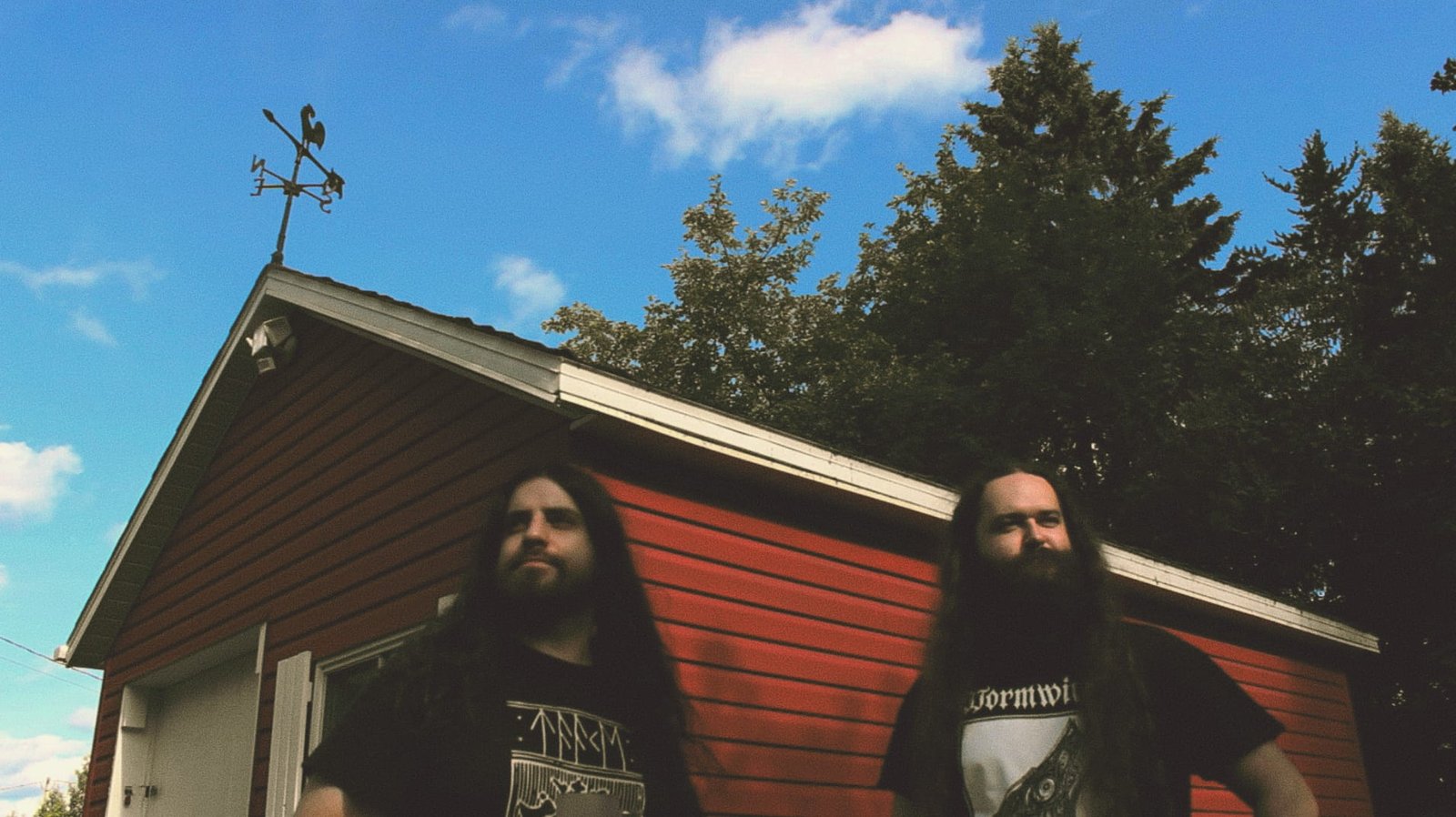
Cogadh es un dúo canadiense formado en 2021 por Ira Lehtovaara (guitarras eléctricas y acústicas, bajo) y Alex Snape (batería, voces, whistles, acordeón y violín), con miembros repartidos entre Ontario y Quebec. En apenas unos años, el proyecto ha pasado de un prometedor EP debut («Runetongue», 2022) a este «Kingmaker», que se presenta como un salto cualitativo notable tanto en composición como en concepto. Si aquel primer trabajo mostraba a una banda anclada en el black metal tradicional con sensibilidad melódica, este álbum consolida esa base y la enriquece con elementos folk, texturas acústicas y un fuerte sentido de atmósfera y lugar.
Desde el primer momento, «Kingmaker» deja claro que no busca el impacto inmediato a base de velocidad constante o agresión sin matices. Aquí la intensidad se construye con paciencia, con estructuras largas, riffs que evolucionan y una atención especial a los detalles. El tema que abre el disco, “Cromwell’s Curse”, es una declaración de intenciones en toda regla. Con más de ocho minutos de duración, el corte se desarrolla de forma orgánica, alternando pasajes de black metal crudo y melódico con secciones donde entran en juego whistles irlandeses, capas ambientales y un tempo más ceremonial. No se trata de adornos gratuitos: estos elementos aportan una sensación de ritual, de historia antigua invocada a través del sonido.
Musicalmente, la influencia de bandas como Darkthrone o Taake se percibe en la crudeza de los riffs y en cierta aspereza deliberada del sonido, pero «Kingmaker» también bebe claramente de formaciones como Havukruunu o Drudkh, especialmente en su forma de integrar melodías épicas y un trasfondo casi pagano. Hay una sensación constante de conexión con la tierra, reforzada por el uso de grabaciones ambientales captadas en los bosques de Quebec. Estos sonidos naturales no interrumpen la música, sino que se integran de manera sutil, reforzando la inmersión y dotando al álbum de una identidad muy concreta.
“Restrainer of Dreams” continúa desarrollando esta idea, con un enfoque algo más directo pero igualmente cargado de atmósfera. Aquí la batería de Alex Snape muestra una versatilidad notable, alternando blast beats clásicos con ritmos más contenidos que permiten respirar a las guitarras. Las voces, mayoritariamente rasgadas y ásperas, se complementan con registros más graves y ocasionales matices casi narrativos, lo que amplía el rango expresivo del álbum. Esta variedad vocal es uno de los aspectos que distingue a «Kingmaker» de muchos debuts del género, donde la uniformidad suele ser la norma.
Uno de los grandes aciertos del disco es su capacidad para mantener la coherencia a lo largo de composiciones relativamente extensas sin caer en la repetición. “Donnchadh, the Hunter” es un ejemplo claro de ello. El tema se construye sobre un riff principal de fuerte carácter melódico que va transformándose progresivamente, apoyado por cambios sutiles en la dinámica y por la entrada de instrumentos acústicos. El violín y el acordeón, utilizados con mesura, añaden un tono melancólico que refuerza el componente narrativo de la canción, evocando imágenes de leyendas antiguas y figuras casi mitológicas.
“Spill the Giant’s Blood” recupera un tono más combativo, con una estructura que se acerca al black metal más clásico, pero sin renunciar a los matices folk que definen el álbum. Aquí el trabajo de guitarras destaca especialmente, con riffs que se entrelazan con líneas melódicas más abiertas, creando una tensión constante entre agresión y solemnidad. Es un tema que funciona muy bien como punto medio del disco, equilibrando la parte más atmosférica con una descarga de energía más directa.
A medida que «Kingmaker» avanza, se hace evidente que no estamos ante una simple colección de canciones, sino ante un álbum pensado como un todo. “The Misery Scryer” profundiza en un terreno más introspectivo, con un tempo más pausado y un énfasis mayor en la construcción de atmósferas densas. Las capas de guitarra se superponen creando una sensación casi hipnótica, mientras las voces parecen surgir desde un segundo plano, como si formaran parte del paisaje sonoro más que de un primer plano narrativo. Es uno de los cortes más oscuros del álbum, y también uno de los más envolventes.
El cierre llega con “The Unbroken Line”, una pieza que resume de forma magistral todo lo que Cogadh propone en «Kingmaker». Aquí confluyen la agresividad del black metal tradicional, las melodías épicas, los elementos folk y el trabajo atmosférico que atraviesa todo el disco. La canción se desarrolla de manera gradual, alcanzando varios clímax emocionales sin perder nunca el control. Es un final poderoso y coherente, que deja la sensación de haber recorrido un viaje completo, no solo una sucesión de temas.
Desde el punto de vista técnico, el álbum presenta un sonido muy bien trabajado. Grabado en Nomadic Arts Studios (Chertsey, Quebec) con grabaciones adicionales en Skaldic Studios (Guelph, Ontario), y mezclado y masterizado por el propio Alex Snape, «Kingmaker» logra un equilibrio notable entre crudeza y claridad. No es un disco pulido en exceso, ni pretende serlo: conserva una aspereza muy propia del black metal, pero permite apreciar cada instrumento y cada capa sonora sin dificultad. El bajo, en particular, tiene una presencia destacable, aportando profundidad y cuerpo al conjunto, algo que no siempre se consigue en este tipo de producciones.
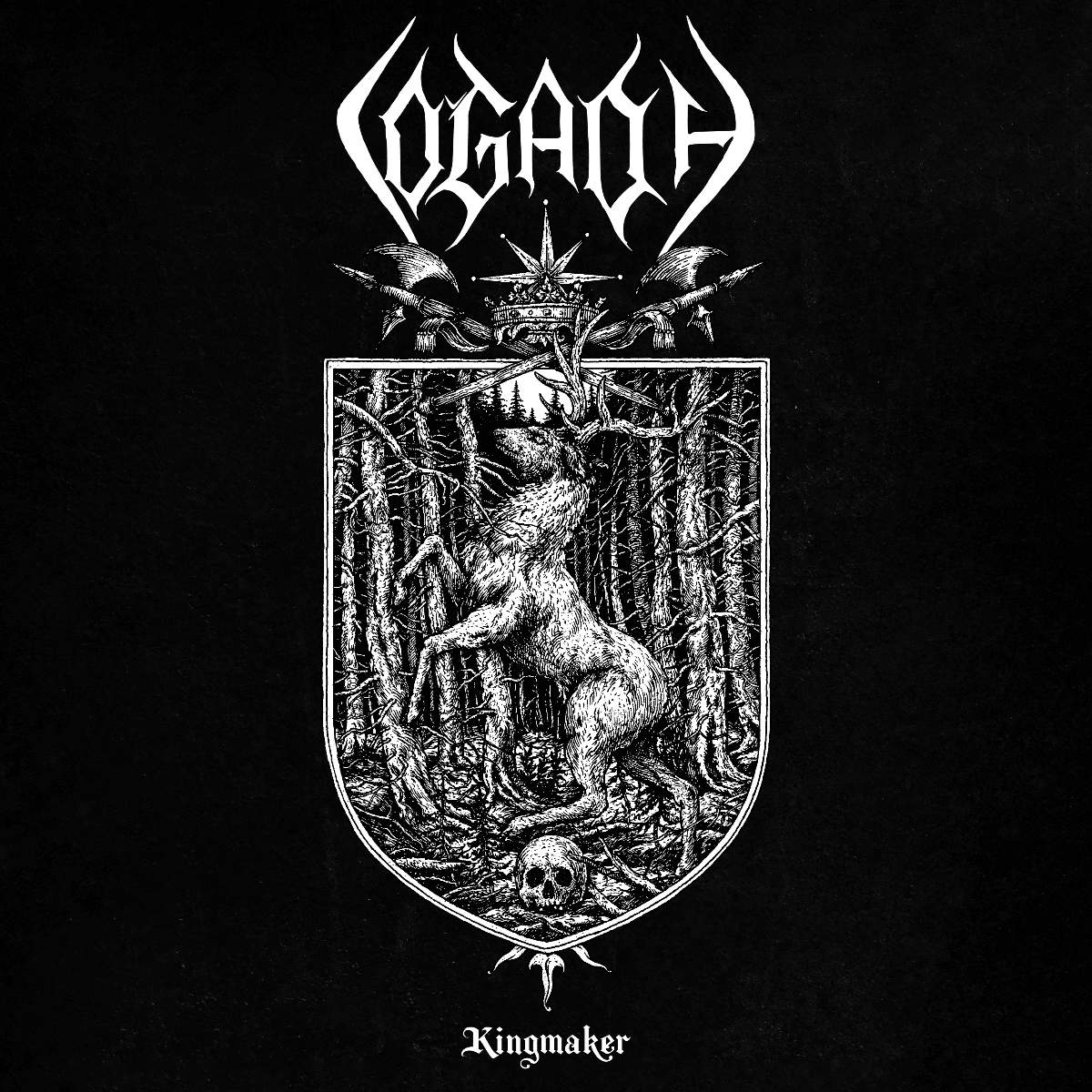
El apartado visual también merece mención. La portada, obra de Manuel Scapinello, encaja perfectamente con la propuesta musical del álbum. Sin recurrir a clichés excesivos, transmite una sensación de antigüedad, conflicto y solemnidad que refuerza el concepto general de «Kingmaker». Es un complemento visual que suma, no un simple adorno.
A nivel lírico y conceptual, aunque «Kingmaker» no se presenta explícitamente como un álbum conceptual, sí hay una línea temática clara relacionada con la historia, el poder, la identidad y el conflicto. Los títulos de las canciones y la atmósfera general sugieren una mirada crítica y reflexiva hacia figuras históricas y mitológicas, tratadas desde una óptica oscura y ambigua, muy en la línea del black metal más introspectivo. No hay aquí glorificación simplista, sino una exploración de la violencia, el legado y las consecuencias del poder.
Comparado con otros lanzamientos recientes dentro del black metal melódico y folk, «Kingmaker» destaca por su madurez. Resulta especialmente llamativo que se trate de un debut, ya que muchas bandas necesitan varios discos para alcanzar este nivel de cohesión y seguridad creativa. Cogadh demuestra haber asimilado sus influencias y haberlas filtrado a través de una identidad propia, algo que no siempre es fácil en un género tan marcado por la tradición.
No obstante, el álbum no está exento de pequeños puntos discutibles. Su duración y el enfoque pausado de algunos temas pueden resultar exigentes para oyentes que busquen inmediatez o un impacto más directo. «Kingmaker» pide tiempo, atención y cierta predisposición a dejarse llevar por sus atmósferas. No es un disco de consumo rápido, sino una obra que gana con escuchas repetidas, cuando los matices empiezan a revelarse con mayor claridad.
En definitiva, «Kingmaker» es un debut notable, ambicioso y muy bien ejecutado. Un álbum que amplía los márgenes del black metal tradicional sin traicionar su esencia, integrando elementos folk y atmosféricos de forma orgánica y coherente. Cogadh se presenta aquí como una banda con una visión clara y un potencial enorme, capaz de dialogar con el pasado del género mientras mira hacia adelante con personalidad propia.
Puntuación: 8,8 / 10
Si este es el punto de partida, el futuro del proyecto se antoja más que prometedor. «Kingmaker» no solo establece a Cogadh como un nombre a tener en cuenta dentro de la escena black metal contemporánea, sino que deja la sensación de que lo mejor aún está por venir.
Tracklist de «Kingmaker»
- «Cromwell’s Curse»
- «Restrainer of Dreams»
- «Donnchadh, the Hunte»
- «Spill the Giant’s Blood»
- «The Misery Scryer»
- «The Unbroken Line»
Multimedia
Miembros
Ira Lehtovaara – Guitarra, Guitarra Acustica, Bajo
Alex Snape – Bacteria, Voz, Acordeoan y Violin.
Redes sociales
Facebook: https://www.facebook.com/CogadhOfficial/
Instagram: https://www.instagram.com/cogadhofficial/
Bandcamp: https://cogadhofficial.bandcamp.com/album/runetongue
There are debut albums that function as a simple calling card, and then there are those that, from the very first contact, make it clear that the band has a well-defined vision and an ambition that goes beyond merely following genre codes. «Kingmaker», the first full-length album from Cogadh, clearly belongs to the second group. It is not just a well-executed black metal album: it is a work that understands tradition, respects it, and, at the same time, allows itself to expand it with personality, cultural identity, and a beautifully constructed sonic narrative.
Cogadh is a Canadian duo formed in 2021 by Ira Lehtovaara (electric and acoustic guitars, bass) and Alex Snape (drums, vocals, whistles, accordion, and violin), with members spread between Ontario and Quebec. In just a few years, the project has evolved from a promising debut EP («Runetongue», 2022) to this «Kingmaker», which represents a notable qualitative leap in both composition and concept. While that first work showed a band anchored in traditional black metal with a melodic sensibility, this album solidifies that foundation and enriches it with folk elements, acoustic textures, and a strong sense of atmosphere and place.
From the outset, «Kingmaker» makes it clear that it does not seek immediate impact through constant speed or unnuanced aggression. Here, intensity is built with patience, using long structures, evolving riffs, and special attention to detail. The opening track, “Cromwell’s Curse”, is a definitive statement of intent. At over eight minutes long, the cut develops organically, alternating passages of raw, melodic black metal with sections where Irish whistles, ambient layers, and a more ceremonial tempo come into play. These are not gratuitous ornaments; these elements provide a sense of ritual—of ancient history invoked through sound.
Musically, the influence of bands like Darkthrone or Taake is perceived in the rawness of the riffs and a certain deliberate harshness in the sound, but «Kingmaker» also draws clearly from outfits like Havukruunuor Drudkh, especially in its way of integrating epic melodies and an almost pagan undertone. There is a constant sense of connection to the earth, reinforced by the use of ambient recordings captured in the forests of Quebec. These natural sounds do not interrupt the music; instead, they are subtly integrated, enhancing the immersion and giving the album a very specific identity.
“Restrainer of Dreams” continues to develop this idea with a somewhat more direct yet equally atmosphere-laden approach. Here, Alex Snape’s drumming shows remarkable versatility, alternating classic blast beats with more restrained rhythms that allow the guitars to breathe. The vocals, mostly raspy and harsh, are complemented by deeper registers and occasional, almost narrative nuances, broadening the album’s expressive range. This vocal variety is one of the aspects that distinguishes «Kingmaker» from many genre debuts where uniformity is often the norm.
One of the record’s greatest successes is its ability to maintain coherence throughout relatively long compositions without falling into repetition. “Donnchadh, the Hunter” is a clear example. The track is built on a primary riff with a strong melodic character that transforms progressively, supported by subtle shifts in dynamics and the introduction of acoustic instruments. The violin and accordion, used sparingly, add a melancholic tone that reinforces the song’s narrative component, evoking images of ancient legends and mythological figures.
“Spill the Giant’s Blood” recovers a more combative tone, with a structure closer to classic black metal but without relinquishing the folk nuances that define the album. The guitar work stands out here, with riffs intertwining with more open melodic lines, creating a constant tension between aggression and solemnity. It works very well as a midpoint for the record, balancing the more atmospheric side with a more direct discharge of energy.
As «Kingmaker» progresses, it becomes evident that we are not dealing with a mere collection of songs, but an album designed as a whole. “The Misery Scryer” delves into more introspective territory, with a slower tempo and a greater emphasis on building dense atmospheres. The guitar layers overlap to create an almost hypnotic sensation, while the vocals seem to emerge from the background, as if they were part of the soundscape rather than a narrative foreground. It is one of the darkest tracks on the album and also one of the most enveloping.
The closure arrives with “The Unbroken Line”, a piece that masterfully summarizes everything Cogadh proposes in «Kingmaker». Here, the aggression of traditional black metal, epic melodies, folk elements, and the atmospheric work that permeates the entire record converge. The song develops gradually, reaching several emotional climaxes without ever losing control. It is a powerful and coherent finale that leaves the listener with the feeling of having completed a journey, not just a succession of tracks.
From a technical standpoint, the album features very well-crafted sound. Recorded at Nomadic Arts Studios(Chertsey, Quebec) with additional recordings at Skaldic Studios (Guelph, Ontario), and mixed and mastered by Alex Snape himself, «Kingmaker» achieves a notable balance between rawness and clarity. It is not an overly polished record, nor does it pretend to be; it retains a harshness very much in line with black metal while allowing each instrument and sonic layer to be appreciated without difficulty. The bass, in particular, has a notable presence, providing depth and body to the mix—something not always achieved in this type of production.
The visual aspect also deserves mention. The cover art, by Manuel Scapinello, fits the album’s musical proposal perfectly. Without resorting to excessive clichés, it transmits a sense of antiquity, conflict, and solemnity that reinforces the general concept of «Kingmaker». It is a visual complement that adds value, not just a mere decoration.
Lyrically and conceptually, although «Kingmaker» is not explicitly presented as a concept album, there is a clear thematic line related to history, power, identity, and conflict. The song titles and general atmosphere suggest a critical and reflective look at historical and mythological figures, treated through a dark and ambiguous lens, very much in line with more introspective black metal. There is no simplistic glorification here, but rather an exploration of violence, legacy, and the consequences of power.
Compared to other recent releases within melodic and folk black metal, «Kingmaker» stands out for its maturity. It is especially striking that this is a debut, as many bands need several records to reach this level of cohesion and creative confidence. Cogadh proves to have assimilated their influences and filtered them through their own identity—something that is not always easy in a genre so marked by tradition.
However, the album is not without small debatable points. Its length and the slow-paced approach of some tracks may be demanding for listeners seeking immediacy or a more direct impact. «Kingmaker» asks for time, attention, and a certain willingness to be swept away by its atmospheres. It is not a record for quick consumption, but a work that gains with repeated listens, as nuances begin to reveal themselves more clearly.
Ultimately, «Kingmaker» is a remarkable debut—ambitious and very well executed. It is an album that expands the margins of traditional black metal without betraying its essence, integrating folk and atmospheric elements in an organic and coherent way. Cogadh presents itself here as a band with a clear vision and enormous potential, capable of dialoguing with the genre’s past while looking forward with its own personality.
Score: 8.8 / 10
If this is the starting point, the project’s future looks more than promising. «Kingmaker» not only establishes Cogadh as a name to watch within the contemporary black metal scene but leaves the feeling that the best is yet to come.