




(English Below)
En la música, como en la vida, el éxito no siempre es un reflejo del talento. A menudo, las joyas más brillantes se quedan sepultadas bajo toneladas de indiferencia, mala distribución, tragedias internas o, simplemente, por haber sido editadas en el momento equivocado.
Hoy me pongo el mono de arqueólogo en Atanathos. No vengo a hablaros de «Altars of Madness», ni de «De Mysteriis Dom Sathanas», ni de «Transilvanian Hunger». Esos ya tienen sus catedrales construidas. Vengo a hablaros de los marginados, de los malditos, de esos álbumes que, si el destino hubiera jugado limpio, hoy serían considerados monumentos de culto masivo. Prepareu-vos para una inmersión profunda en las cloacas del metal extremo: cinco obras maestras absolutas e infravaloradas que tenéis la obligación moral de rescatar del olvido.
Para mí, un disco infravalorado no es un disco malo que le gusta a cuatro gatos. Es una obra que posee el mismo nivel de genialidad, innovación y atmósfera que los grandes clásicos de su género, pero que por azares del destino comercial no llegó a las masas. Para analizar estos álbumes, tenemos que ponernos el traje de la época, entender el contexto de su lanzamiento y desgranar su música con rigor analítico. Vamos a hacer justicia.
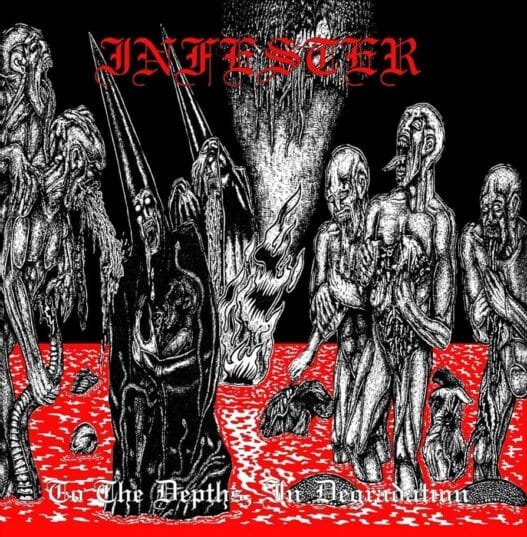
Infester – «To the Depths, in Degradation» (1994) El Death Metal más asqueroso y perfecto jamás grabado
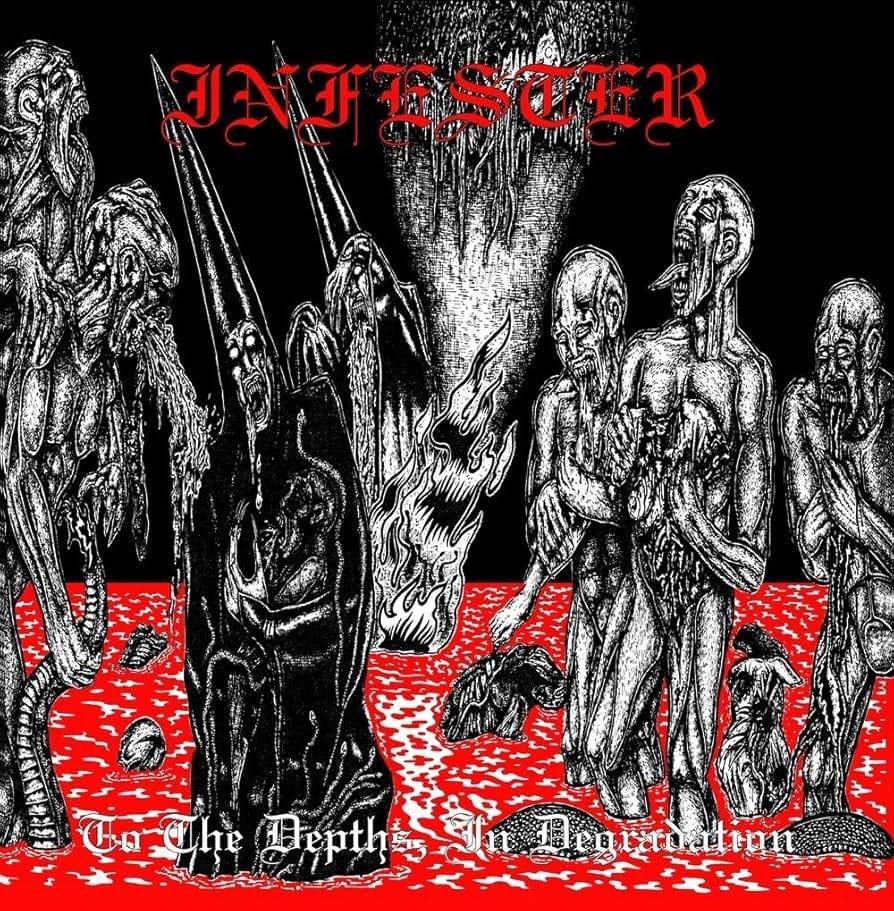
Si me dieran un euro por cada vez que alguien me recomienda el «Onward to Golgotha» de Incantation como el culmen del Death Metal oscuro y cavernoso, tendría suficiente dinero para comprarme una discográfica. Pero casi nadie menciona a Infester. Editado en 1994 por el sello Moribund Records, este único larga duración de la banda de Washington es, sin lugar a dudas, uno de los discos más terroríficos, depravados y compositivamente brillantes de la historia del género.
El contexto del olvido
En 1994, el Death Metal estaba sufriendo una crisis de identidad. El mercado estaba saturado de clones de Florida, y las bandas más técnicas empezaban a aburrir al personal. El underground estaba girando la cabeza hacia Noruega y el Black Metal. En medio de este culebrón, «To the Depths, in Degradation» pasó completamente desapercibido. Además, la banda se disolvió poco después debido a controversias internas y a una distribución paupérrima que convirtió las copias originales en vinilo o CD en santos griales inalcanzables.
Análisis técnico y atmosférico
Musicalmente, lo que hizo el guitarrista y vocalista Jason Oliver en este disco roza la esquizofrenia genial. La afinación es absurdamente baja para la época (creando una masa sónica densísima), pero lo que fascina es el uso del teclado de fondo. No se usa para hacer melodías bonitas al estilo sinfónico, sino para meter frecuencias de órgano de iglesia distorsionado que generan una ansiedad insoportable.
Las Voces: Oliver despliega un abanico que va desde el growl más profundo y húmedo hasta unos chillidos de dolor real que erizan la piel. No parece un cantante ensayando; parece un maníaco siendo torturado en directo.
La Batería: Tocada por Todd Snee, es un caos controlado. Los cambios de tempo son abruptos: pasan de un blast beat primitivo y aplastante a un ritmo doom arrastrado que emula el caminar de un monstruo en una cripta.
¿Por qué merece más reconocimiento? Porque anticipó en quince años toda la oleada actual de Cavernous Death Metal (Portal, Dead Congregation, Grave Miasma). Si queréis saber de dónde sale el verdadero horror sónico, tenéis que bajar a las profundidades con Infester.
The Chasm – «Procession To The Infraworld « (1998) La genialidad del Death Metal místico mexicano
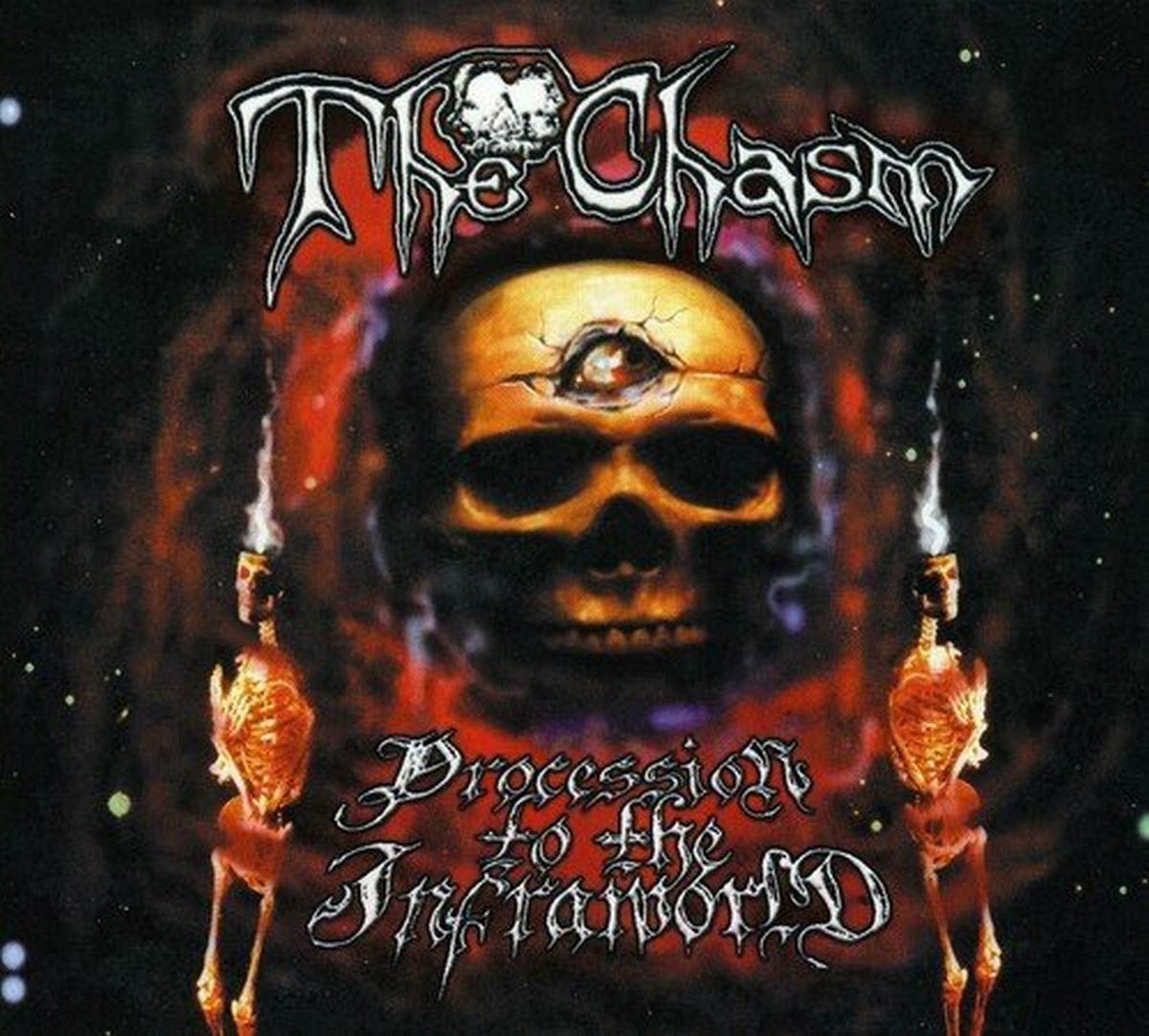
Cruzar la frontera de los Estados Unidos hacia el sur en los años 90 significaba toparse con una de las escenas más jodidamente apasionadas y creativas del planeta, pero sistemáticamente ignorada por los grandes medios europeos y norteamericanos. Hablo de México. Y si hay un nombre que merece un monumento en el centro de la escena extrema, es el de Daniel Corchado y sus chicos de The Chasm. Su tercer álbum, «Procession To The Infraworld » (1998), es una obra de arte total que combina la brutalidad del Death con el misticismo del Heavy clásico.
El contexto del olvido
The Chasm jugaban en otra liga, pero tenían un gran problema geográfico y financiero. Tras dejar la banda Cenotaph, Corchado fundó The Chasm con una visión muy clara: crear un Death Metal épico, oscuro, que contara historias de batallas espirituales y mundos perdidos. A finales de los 90, la prensa internacional solo tenía ojos para el Melodeath sueco (In Flames, Dark Tranquillity). El sonido de The Chasm era demasiado complejo, demasiado intrincado y nada comercial para entrar en esas listas de éxitos. Editado por sellos pequeños y con giras limitadas por problemas de visado, el disco quedó como un secreto a voces entre los buscadores de oro del underground.
Análisis técnico: El arte del riff infinito
Lo que ocurre en «Procession To The Infraworld » es un milagro compositivo. Daniel Corchado y Julio Viterbo tejen una red de guitarras que hereda directamente la estructura de Iron Maiden o Mercyful Fate, pero acelerada y oscurecida hasta el extremo.
| Elemento Técnico | Características en el álbum | Impacto en el oyente |
| Estructura de Riffs | No repetitivos, evolutivos, con melodías en terceras menores. | Sensación de viaje o narrativa cinematográfica. |
| Sección Rítmica | Cambios de compás constantes (4/4 a 6/8 y combinaciones complejas). | Evita la monotonía; exige escucha activa. |
| Atmósfera | Producción seca, orgánica, con la guitarra rítmica muy presente. | Sonido atemporal que no envejece como las producciones digitales. |
Las transiciones en temas como «At the Edge of the Nebula Mortis» o «Cosmic Landscapes of Sorrow» son tan fluidas que no te das cuenta de que has escuchado diez riffs distintos en tres minutos. Es un álbum técnico pero con alma; no busca que veas lo rápido que mueven los dedos, sino que sientas la inmensidad del vacío.
¿Por qué merece más reconocimiento? Porque es el eslabón perdido entre el Death Metal clásico y el Progresivo más oscuro. The Chasm demostraron que se puede ser brutal sin perder la elegancia del Heavy Metal tradicional.
Vinterland – «Welcome to My Last Chapter» (1996) El Black Metal melódico que debió reinar junto a Dissection
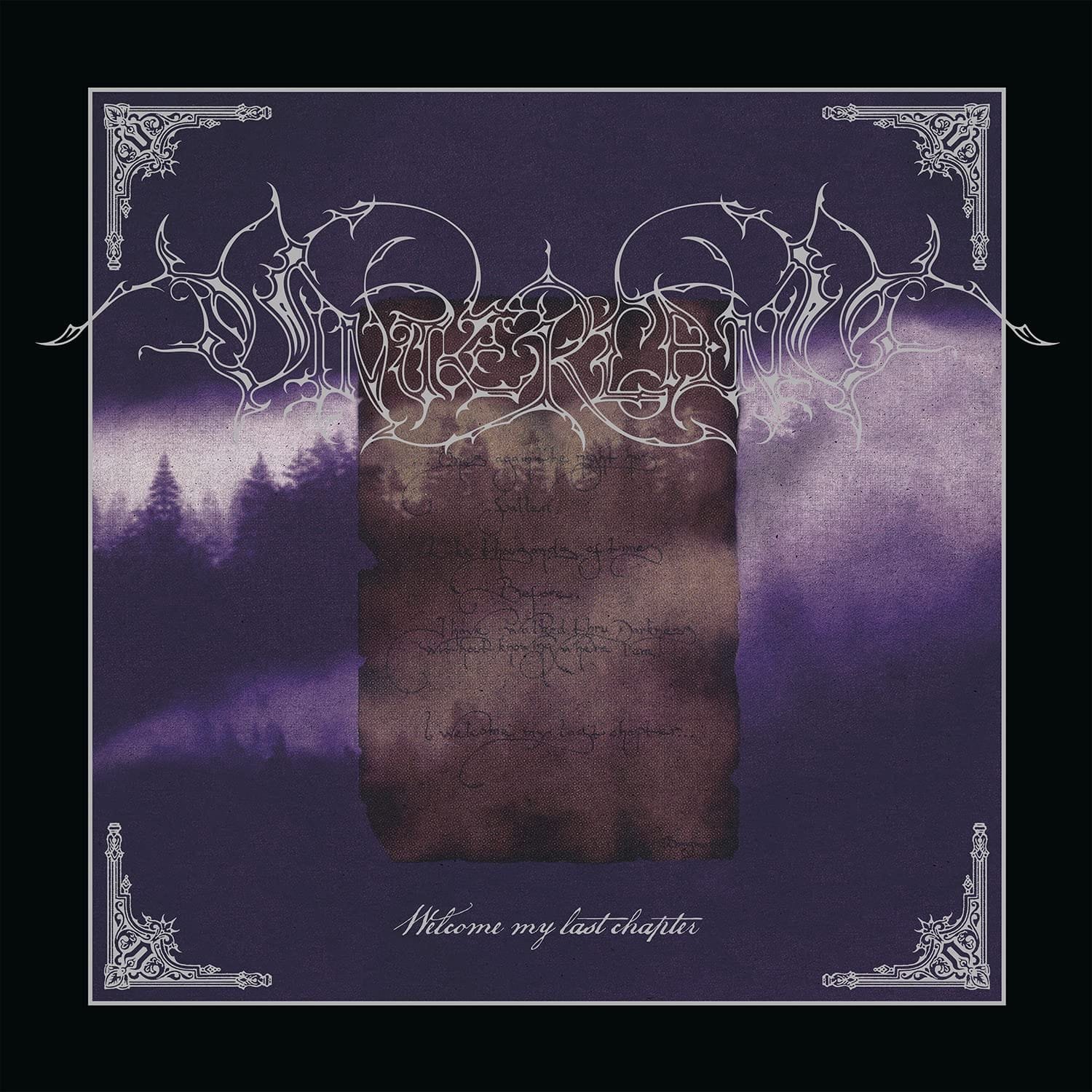
1996 fue el año en que el Black Metal melódico alcanzó su cota más alta de popularidad gracias al «Storm of the Light’s Bane» de Dissection. Todo el mundo quería sonar como Jon Nödtveidt. Cientos de bandas salieron de Suecia imitando ese sonido gélido y armonizado, pero solo una logró igualar (y en algunos pasajes, superar) la majestuosidad de Dissection. Hablo de Vinterland y su único testamento: «Welcome to My Last Chapter».
El contexto del olvido
Vinterland lo tenía todo para triunfar: el sonido perfecto, la estética adecuada y los músicos (los hermanos Kvist y Andreas Jonsson) eran superdotados de la composición. Sin embargo, cayeron en la trampa del sello discográfico. Lanzado por No Fashion Records, un sello famoso por descubrir talentos pero también por su nefasta gestión y nula promoción, el disco quedó sepultado bajo el peso de los lanzamientos más comerciales de la época. Para cuando la banda quiso reaccionar, los miembros ya estaban cansados de la industria y decidieron congelar el proyecto, dejando este álbum como su única y solitaria obra maestra.
Análisis técnico: La melancolía del hielo
A diferencia de sus compatriotas de Dissection, que tenían un enfoque más agresivo y directo, Vinterland introdujo una dosis masiva de melancolía y texturas acústicas que daban a sus temas una profundidad emocional tremenda.
Las Guitarras: El trabajo de guitarras en este disco es de una belleza escalofriante. Utilizan la técnica del tremolo picking sobre progresiones de acordes menores que crean una sensación de tormenta de nieve constante. Las armonías entre las dos guitarras están cuidadas al milímetro, buscando siempre la tensión emocional más que la velocidad pura.
Los Teclados: Usados con una sutileza magistral. No saturan la mezcla; aparecen en momentos clave (como en la introducción de «Our Dawn of Glory») para añadir una capa de solemnidad invernal que te transporta de inmediato a un paisaje escandinavo desolado.
La Voz: D. V. Kvist ofrece un rasgado agudo, desesperado, que transmite una sensación de pérdida y aislamiento total. No busca asustar; busca contagiar su agonía.
¿Por qué merece más reconocimiento? Porque es un disco perfecto de principio a fin. No hay un solo segundo de relleno en «Welcome to My Last Chapter». Es un manual de cómo hacer Black Metal melódico sin caer en lo cursi o en lo comercial. Un monumento al invierno eterno.
Lykathea Aflame – «Elvenefris» (2000) La utopía vanguardista del Brutal Death Metal
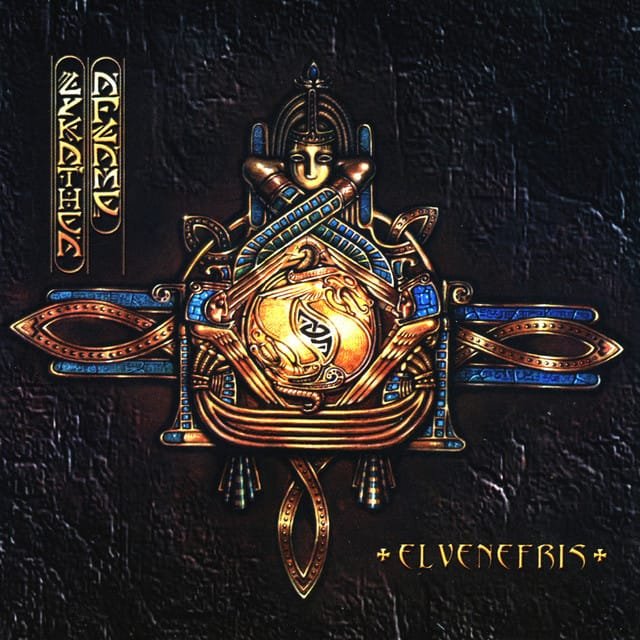
Si hay un disco en esta lista que desafía cualquier lógica musical, que te vuela la cabeza en la primera escucha y te deja pensando «¿pero qué demonios acabo de oír?», es «Elvenefris» de los checos Lykathea Aflame. Editado en el año 2000 por Obscene Productions, este trabajo es una anomalía genética: una mezcla imposible entre el Brutal Death Metal más veloz y técnico, música mística oriental, teclados celestiales y una filosofía lírica de luz, superación y positividad. Sí, habéis leído bien: Brutal Death Metal positivo.
El contexto del olvido
En el año 2000, el Brutal Death Metal estaba obsesionado con la pornografía, las autopsias y la depravación (gracias al empuje de bandas como Devourment o Disgorge). Que apareciera una banda de la República Checa tocando a velocidades inhumanas pero con letras que hablaban de la elevación del espíritu humano, la paz interior y la belleza del cosmos, fue un cortocircuito para la escena. El público no sabía cómo procesarlo. Los puristas del gore los rechazaron por «raros» y los amantes del metal progresivo no soportaban la brutalidad de la batería. La banda, abrumada por la falta de comprensión y por problemas de salud mental de algunos componentes, se disolvió poco después de cambiar su nombre a Lykathea Aflame (antes eran conocidos como Appalling Spawn).
Análisis técnico: El caos iluminado
El corazón y el motor de «Elvenefris» es su baterista, Tomas Corn. Lo que este hombre hace detrás de los parches roza lo sobrehumano. Los blast beats son de una velocidad absurda, pero su uso de los platos, los contratiempos y los cambios de ritmo es tan creativo que eleva las canciones a otra dimensión.
A nivel de guitarras y teclados, la estructura es una locura:
[Riff de Brutal Death Técnico] -> [Parón Seco con Teclados New Age] -> [Melodía Árabe con Cítara] -> [Blast Beat Apocalíptico]
Es una montaña rusa sónica. Temas como «Land Where Sympathy Is Air» o «To Give» combinan pasajes donde te aplastan con una fuerza tremenda para, de repente, abrir paso a un solo de guitarra ultra-melódico y luminoso que parece sacado de un disco de Steve Vai o Yngwie Malmsteen, todo ello aderezado con samples de coros e instrumentos tradicionales orientales.
¿Por qué merece más reconocimiento? Porque es un disco único. No hay nada que suene como Lykathea Aflame en todo el planeta. Consiguieron expandir los límites de un género tan cerrado como el Brutal Death y demostrar que la música extrema también puede usarse para buscar la luz en lugar de la oscuridad. Una genialidad incomprendida.
Time Ghoul – «Panoramic Twilight» (Demo, 1994) Los arquitectos olvidados del Death Metal de Ciencia Ficción
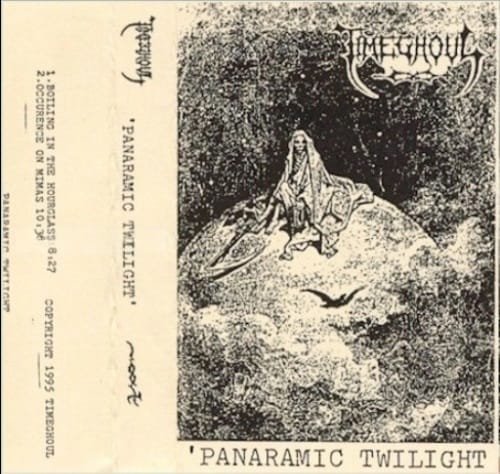
Para cerrar esta crónica de la injusticia, no os traigo un larga duración, sino un EP/maqueta que contiene más ideas, originalidad y atmósfera que el 90% de las discografías completas de muchas bandas consagradas. Viajamos a Missouri, Estados Unidos, año 1994. Un grupo de adolescentes colgados de la astronomía y la literatura de horror cósmico graba su segunda maqueta bajo el nombre de Time Ghoul. El resultado fue «Panoramic Twilight», una de las mayores cumbres del Death Metal progresivo y de ciencia ficción de la historia.
El contexto del olvido
Time Ghoul nunca llegó a grabar un disco de estudio propiamente dicho. Vivían en una zona aislada de la escena principal de los Estados Unidos, no tenían apoyo de ningún sello discográfico importante y dependían exclusivamente del intercambio de cassettes por correo para que su música se conociera. Tras editar dos maquetas («Tumultuous Travelings» en 1992 y esta «Panoramic Twilight» en 1994), la banda se separó debido a la falta de recursos y a la necesidad de sus miembros de buscar trabajos convencionales para sobrevivir. Durante casi dos décadas, su nombre fue un mito que solo los coleccionistas más obsesivos conocían, hasta que sellos como Dark Descent Records reeditaron sus maquetas en CD y vinilo en los años 2010, haciendo justicia tardía a su legado.
Análisis técnico: El horror cósmico hecho música
Escuchar «Panoramic Twilight» es como leer un relato de H.P. Lovecraft adaptado al espacio exterior. La banda no se conformaba con hacer Death Metal rápido; querían que sintieras la inmensidad y la indiferencia del universo.
Los Coros y Voces: Lo más rompedor de Time Ghoul fue la inclusión de coros masculinos limpios y solemnes, grabados con múltiples capas de eco, que contrastaban con unos guturales profundos y cavernosos. Cuando en el tema «Occurrence on Orion» entran esos coros espaciales, la música adquiere una escala titánica, como si estuvieras presenciando la muerte de una estrella.
La Estructura Compositiva: Los temas son largos (superan los 7 y 8 minutos) y se estructuran como capítulos de una novela de ciencia ficción. Utilizan guitarras rítmicas con disonancias raras que crean un ambiente de extrañeza tecnológica, combinadas con solos melódicos muy atmosféricos que evocan la soledad del astronauta perdido en el vacío.
¿Por qué merece más reconocimiento? Porque bandas hiper-famosas actuales como Blood Incantation o Cosmic Putrefaction le deben prácticamente toda su carrera a las ideas que estos chavales de Missouri plasmaron en una cinta de cassette en 1994. Fueron los verdaderos pioneros del Death Metal espacial.
Cuadro comparativo: Las razones del olvido
Para entender mejor por qué estas cinco obras maestras no están hoy en el olimpo del gran público, he preparado este desglose de los factores externos que truncaron sus carreras:
| Banda | Álbum / Obra | Año | Género Principal | Factor Clave del Olvido | Legado Actual |
| Infester | To the Depths… | 1994 | Cavernous Death Metal | Crisis del género / Mala distribución | Banda de culto reverenciada por la nueva ola oscura. |
| The Chasm | Procession to… | 1998 | Épico / Tech-Death | Aislamiento geográfico y de prensa | Considerados héroes absolutos del undergroundmundial. |
| Vinterland | Welcome to My… | 1996 | Black Metal Melódico | Negligencia del sello discográfico | Disco de cabecera para los puristas del sonido sueco. |
| Lykathea Aflame | Elvenefris | 2000 | Avant-Garde Brutal Death | Temática e innovación incomprendida | Obra de arte aislada sin clones capaces de imitarla. |
| Time Ghoul | Panoramic Twilight | 1994 | Sci-Fi / Progressive Death | Formato maqueta / Falta de apoyo | Padres espirituales del Death Metal espacial moderno. |
Conclusion: Nuestro deber como oyentes extremos
Llegados a este punto, queda claro que la historia de la música extrema no la escriben siempre los mejores, sino los que consiguen sobrevivir a los engranajes de la industria. Como oyentes, nuestro papel no puede ser pasivo. No podemos limitarnos a escuchar los mismos diez discos de siempre y quejarnos de que la escena ya no sorprende.
Estas cinco bandas sacrificaron su tiempo, su dinero y, en algunos casos, su cordura para dejarnos estas botellas lanzadas al mar del tiempo. Abrirlas, escuchar su contenido con el respeto que se merecen y compartir su nombre con otros maníacos de la distorsión es el acto de rebeldía más grande que podemos cometer hoy en día.
Apagad las listas automáticas de vuestras plataformas de streaming, dejad de lado por una tarde los algoritmos y buscad estas obras ocultas. Vuestro cerebro y vuestra alma metalera os lo agradecerá.
In music, as in life, success is not always a reflection of talent. Often, the brightest gems remain buried under tons of indifference, poor distribution, internal tragedies, or simply because they were released at the wrong time.
Today, I’m putting on my archaeologist gear at Atanathos. I’m not here to talk to you about «Altars of Madness», «De Mysteriis Dom Sathanas», or «Transilvanian Hunger». Those already have their cathedrals built. I am here to talk to you about the outcasts, the damned, those albums that, if destiny had played fair, would today be considered monuments of massive cult worship. Prepare yourselves for a deep dive into the sewers of extreme metal: five absolute, underrated masterpieces that you have a moral obligation to rescue from oblivion.
To me, an underrated album is not a bad record that only a handful of people like. It is a work that possesses the exact same level of genius, innovation, and atmosphere as the great classics of its genre, but due to the whims of the commercial market, never reached the masses. To analyze these albums, we have to step into the boots of the era, understand the context of their release, and dissect their music with analytical rigor. We are going to do them justice.
Infester – «To the Depths, in Degradation» (1994) The filthiest and most perfect Death Metal ever recorded
If I had a euro for every time someone recommends Incantation’s «Onward to Golgotha» as the pinnacle of dark, cavernous Death Metal, I’d have enough money to buy myself a record label. Yet, almost nobody mentions Infester. Released in 1994 by the label Moribund Records, this sole full-length from the Washington band is, without a doubt, one of the most terrifying, depraved, and compositionally brilliant albums in the history of the genre.
The Context of Oblivion
In 1994, Death Metal was suffering an identity crisis. The market was oversaturated with Florida clones, and more technical bands were starting to bore audiences. The underground was turning its head toward Norway and Black Metal. In the midst of this soap opera, «To the Depths, in Degradation» went completely unnoticed. Furthermore, the band dissolved shortly after due to internal controversies and dismal distribution, which turned the original vinyl and CD copies into unattainable holy grails.
Technical and Atmospheric Analysis
Musically, what guitarist and vocalist Jason Oliver pulled off on this record borders on brilliant schizophrenia. The tuning is absurdly low for the time (creating a dense sonic mass), but what truly fascinates is the background use of keyboards. They aren’t used to play pretty, symphonic melodies, but rather to pump in distorted church organ frequencies that generate an unbearable amount of anxiety.
The Vocals: Oliver deploys a range that goes from the deepest, wettest growl to genuine shrieks of pain that will make your skin crawl. He doesn’t sound like a singer rehearsing; he sounds like a maniac being tortured live.
The Drums: Played by Todd Snee, they are a masterclass in controlled chaos. The tempo shifts are abrupt: transitioning from a primitive, crushing blast beat to a crawling doom rhythm that emulates a monster walking through a crypt.
Why does it deserve more recognition? Because it anticipated by fifteen years the entire current wave of Cavernous Death Metal (Portal, Dead Congregation, Grave Miasma). If you want to know where true sonic horror comes from, you have to go down to the depths with Infester.
The Chasm – «Procession To The Infraworld « (1998) The genius of mystical Mexican Death Metal
Crossing the United States border to the south in the ’90s meant stumbling upon one of the most passionately creative scenes on the planet, yet one systematically ignored by major European and North American media. I am talking about Mexico. And if there is one name that deserves a monument in the center of the extreme scene, it is Daniel Corchado and his boys from The Chasm. Their third album, «Procession To The Infraworld « (1998), is a total work of art that seamlessly combines the brutality of Death Metal with the mysticism of classic Heavy Metal.
The Context of Oblivion
The Chasm were playing in a whole different league, but they faced a massive geographical and financial hurdle. After leaving the band Cenotaph, Corchado founded The Chasm with a very clear vision: to create an epic, dark Death Metal that told stories of spiritual battles and lost worlds. In the late ’90s, the international press only had eyes for Swedish Melodeath (In Flames, Dark Tranquillity). The Chasm’s sound was too complex, too intricate, and not commercial enough to crack those charts. Released by small labels and restricted by limited touring options due to visa issues, the album remained an open secret among underground gold-diggers.
Technical Analysis: The Art of the Infinite Riff
What happens in «Procession To The Infraworld « is a songwriting miracle. Daniel Corchado and Julio Viterbo weave a guitar web that inherits its structure directly from Iron Maiden or Mercyful Fate, but accelerated and darkened to the absolute extreme.
| Technical Element | Album Characteristics | Impact on the Listener |
| Riff Structure | Non-repetitive, evolving, featuring minor third melodies. | A sense of a journey or a cinematic narrative. |
| Rhythm Section | Constant time signature changes (4/4 to 6/8 and complex combos). | Avoids monotony; demands active listening. |
| Atmosphere | Dry, organic production with a highly prominent rhythm guitar. | A timeless sound that doesn’t age like digital productions. |
The transitions in tracks like «At the Edge of the Nebula Mortis» or «Cosmic Landscapes of Sorrow» are so seamless that you won’t even notice you’ve listened to ten different riffs in three minutes. It is a technical album, but one with a soul; it doesn’t try to show off how fast their fingers move, but rather makes you feel the vastness of the void.
Why does it deserve more recognition? Because it is the missing link between classic Death Metal and the darkest Progressive Metal. The Chasm proved that you can be brutal without losing the elegance of traditional Heavy Metal.
Vinterland – «Welcome to My Last Chapter» (1996) The Melodic Black Metal that should have ruled alongside Dissection
1996 was the year Melodic Black Metal reached its peak popularity, thanks to Dissection’s «Storm of the Light’s Bane». Everyone wanted to sound like Jon Nödtveidt. Hundreds of bands emerged from Sweden mimicking that icy, harmonized sound, but only one managed to match (and in some passages, surpass) the majesty of Dissection. I am talking about Vinterland and their sole testament: «Welcome to My Last Chapter».
The Context of Oblivion
Vinterland had everything it took to succeed: the perfect sound, the right aesthetic, and musicians (the Kvist brothers and Andreas Jonsson) who were songwriting prodigies. However, they fell into a record label trap. Released by No Fashion Records, a label famous for discovering talent but equally notorious for its disastrous management and zero promotion the album was buried under the weight of the era’s more commercial releases. By the time the band wanted to react, the members were already fed up with the industry and decided to freeze the project, leaving this album as their one and only lonely masterpiece.
Technical Analysis: The Melancholy of Ice
Unlike their compatriots in Dissection, who had a more aggressive and direct approach, Vinterland introduced a massive dose of melancholy and acoustic textures that gave their tracks tremendous emotional depth.
The Guitars: The guitar work on this album is of a chilling beauty. They utilize tremolo picking over minor chord progressions to create the sensation of a constant blizzard. The harmonies between the two guitars are meticulously arranged, always aiming for emotional tension rather than pure speed.
The Keyboards: Used with masterful subtlety. They never clutter the mix; instead, they appear at key moments (like the intro to «Our Dawn of Glory») to add a layer of winter solemnity that instantly transports you to a desolate Scandinavian landscape.
The Vocals: D. V. Kvist delivers a high-pitched, desperate shriek that conveys a feeling of total loss and isolation. He isn’t trying to scare you; he’s trying to make you feel his agony.
Why does it deserve more recognition? Because it is a flawless album from start to finish. There isn’t a single second of filler on «Welcome to My Last Chapter». It is a textbook blueprint on how to make Melodic Black Metal without falling into cheesy or commercial tropes. A monument to eternal winter.
Lykathea Aflame – «Elvenefris» (2000) The avant-garde utopia of Brutal Death Metal
If there is one album on this list that defies all musical logic, that blows your mind on the very first listen and leaves you thinking, «What on earth did I just hear?», it is «Elvenefris» by the Czech outfit Lykathea Aflame. Released in 2000 by Obscene Productions, this work is a genetic anomaly: an impossible blend of the fastest, most technical Brutal Death Metal, mystical Middle Eastern music, celestial keyboards, and a lyrical philosophy of light, self-improvement, and positivity. Yes, you read that right: positive Brutal Death Metal.
The Context of Oblivion
In the year 2000, Brutal Death Metal was obsessed with pornography, autopsies, and depravacy (thanks to the push of bands like Devourment or Disgorge). Having a band from the Czech Republic show up playing at inhuman speeds but with lyrics addressing the elevation of the human spirit, inner peace, and the beauty of the cosmos completely short-circuited the scene. Audiences didn’t know how to process it. Gore purists rejected them for being «weird,» and progressive metal lovers couldn’t stand the brutality of the drumming. Overwhelmed by the lack of understanding and internal mental health struggles among some members, the band dissolved shortly after changing their name to Lykathea Aflame (they were previously known as Appalling Spawn).
Technical Analysis: Enlightened Chaos
The heart and engine of «Elvenefris» is its drummer, Tomas Corn. What this man does behind the kit borders on the superhuman. The blast beats are absurdly fast, but his use of cymbals, syncopation, and rhythm changes is so creative that it elevates the songs into another dimension.
On a guitar and keyboard level, the structure is insane:
[Technical Brutal Death Riff] -> [Abrupt Pause with New Age Keyboards] -> [Arabic Sitar Melody] -> [Apocalyptic Blast Beat]
It is a sonic roller coaster. Tracks like «Land Where Sympathy Is Air» or «To Give» combine crushing passages of immense strength with sudden shifts into ultra-melodic, luminous guitar solos that sound straight out of a Steve Vai or Yngwie Malmsteen record, all seasoned with choral samples and traditional Middle Eastern instruments.
Why does it deserve more recognition? Because it is a one-of-a-kind album. Nothing else on the planet sounds like Lykathea Aflame. They managed to expand the boundaries of a genre as rigid as Brutal Death and proved that extreme music can also be used to seek the light instead of the darkness. A misunderstood stroke of genius.
Time Ghoul – «Panoramic Twilight» (Demo, 1994) The forgotten architects of Sci-Fi Death Metal
To close this chronicle of injustice, I am not bringing you a full-length album, but rather an EP/demo that packs more ideas, originality, and atmosphere than 90% of the complete discographies of many established bands. We travel to Missouri, United States, in the year 1994. A group of teenagers obsessed with astronomy and cosmic horror literature records their second demo under the name Time Ghoul. The result was «Panoramic Twilight», one of the greatest zeniths of progressive and sci-fi Death Metal in history.
The Context of Oblivion
Time Ghoul never got to record a proper studio album. They lived in an area isolated from the main US scene, lacked support from any major record label, and relied exclusively on mail-order cassette trading to get their music out. After releasing two demos («Tumultuous Travelings» in 1992 and this «Panoramic Twilight» in 1994), the band split up due to a lack of resources and the members’ need to find conventional jobs to survive. For nearly two decades, their name was a myth known only to the most obsessive collectors—until labels like Dark Descent Records reissued their demos on CD and vinyl in the 2010s, doing belated justice to their legacy.
Technical Analysis: Cosmic Horror Turned into Music
Listening to «Panoramic Twilight» is like reading an H.P. Lovecraft story adapted for outer space. The band wasn’t content with just making fast Death Metal; they wanted you to feel the vastness and indifference of the universe.
The Choirs and Vocals: The most groundbreaking aspect of Time Ghoul was the inclusion of clean, solemn male choirs recorded with multiple layers of echo, contrasting with deep, cavernous growls. When those space choirs kick in on the track «Occurrence on Orion», the music takes on a titanic scale, as if you were witnessing the death of a star.
The Songwriting Structure: The tracks are long (stretching past the 7 and 8-minute marks) and are structured like chapters of a science fiction novel. They use rhythm guitars with odd dissonances that create an aura of technological strangeness, paired with highly atmospheric melodic solos that evoke the loneliness of an astronaut lost in the void.
Why does it deserve more recognition? Because massively famous modern bands like Blood Incantationor Cosmic Putrefaction owe virtually their entire careers to the ideas these kids from Missouri captured on a cassette tape back in 1994. They were the true pioneers of space Death Metal.
Comparative Chart: The Reasons for Oblivion
To better understand why these five masterpieces are not currently sitting in the pantheon of the general public, I have prepared this breakdown of the external factors that derailed their careers:
| Band | Album / Work | Year | Main Genre | Key Factor for Oblivion | Current Legacy |
| Infester | To the Depths… | 1994 | Cavernous Death Metal | Genre crisis / Poor distribution | Cult band revered by the dark new wave. |
| The Chasm | Procession to… | 1998 | Epic / Tech-Death | Geographical and press isolation | Considered absolute heroes of the global underground. |
| Vinterland | Welcome to My… | 1996 | Melodic Black Metal | Record label negligence | Essential album for purists of the Swedish sound. |
| Lykathea Aflame | Elvenefris | 2000 | Avant-Garde Brutal Death | Misunderstood themes and innovation | An isolated masterpiece with no clones capable of mimicking it. |
| Time Ghoul | Panoramic Twilight | 1994 | Sci-Fi / Progressive Death | Demo tape format / Lack of backing | Spiritual fathers of modern space Death Metal. |
Conclusion: Our Duty as Extreme Listeners
At this point, it is clear that the history of extreme music isn’t always written by the best, but by those who manage to survive the gears of the industry. As listeners, our role cannot be passive. We cannot limit ourselves to listening to the same ten albums over and over while complaining that the scene no longer surprises us.
These five bands sacrificed their time, their money, and, in some cases, their sanity to leave us these messages in a bottle thrown into the sea of time. Uncorking them, listening to their contents with the respect they deserve, and sharing their names with other distortion maniacs is the greatest act of rebellion we can commit today.
Turn off the automatic playlists on your streaming platforms, push the algorithms aside for an afternoon, and seek out these hidden gems. Your brain and your metal soul will thank you for it.