






(English Below)
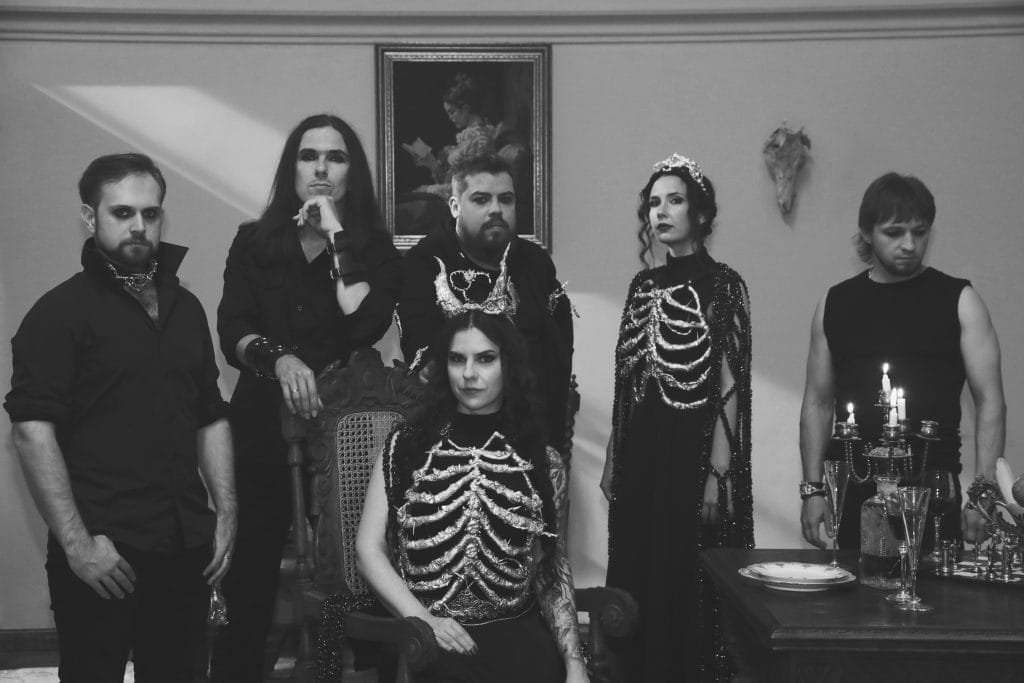
La banda bielorrusa Belle Morte no solo hace Metal Sinfónico Gótico; redefine el género al convertirlo en un crisol de culturas. Tras explorar la obsesión en su álbum conceptual «Crime of Passion», ahora se embarcan en una travesía mundial con «Pearl Hunting» (enero de 2025). Este ambicioso trabajo fusiona la potencia del dark metal con instrumentos tradicionales de Japón, Perú, Armenia y más, como ya lo demostraron con su épico sencillo «Jorōgumo». Hoy profundizaremos con Belle Morte en los retos y las recompensas de esta visión global, su perspectiva sobre la escena underground y qué significa realmente la «caza de perlas» en su evolución artística.
- Belle Morte siempre ha fusionado el Metal Sinfónico Gótico, pero «Pearl Hunting» promete un enfoque global al integrar instrumentos tradicionales de Mongolia, Japón, Perú, y más. ¿Cómo gestionasteis logísticamente y artísticamente una colaboración tan ambiciosa a nivel internacional?
Definitivamente fue una evolución orgánica. Honestamente, si hubiéramos sabido desde el principio cuántas personas necesitaríamos encontrar, coordinar e incorporar, probablemente no nos habríamos atrevido a intentar algo así.
Al principio, solo planeamos crear unas pocas canciones con elementos folk porque cada uno de nosotros tenía un instrumento tradicional favorito con el que queríamos trabajar. Logísticamente, no siempre fue fácil, especialmente con colaboradores distribuidos en diferentes países y zonas horarias. Pero artísticamente, fue pura alegría. Cada músico entendió el núcleo emocional de la canción y contribuyó de una manera que la fortalecía en lugar de eclipsarla.
A medida que el proceso se desarrollaba, nos dimos cuenta de que ya teníamos suficiente material para un EP. Cuanto más grabábamos, más ideas surgían y más instrumentos queríamos incluir. Antes de darnos cuenta, teníamos un álbum de larga duración en nuestras manos.
El sencillo «Jorōgumo» es una magistral unión de Dark Heavy Metal con koto, shamisen y shakuhachi, inspirada en el folclore japonés. ¿Cómo garantiza la banda la autenticidad y el respeto cultural al incorporar instrumentos de tradiciones tan específicas?
Cuando mezclas algo tan culturalmente específico y profundo como los instrumentos tradicionales japoneses con una base de gothic metal, el primer paso es la inmersión total. Tienes que estudiar los instrumentos, entender cómo se tocan, qué se siente natural para ellos y qué definitivamente no. Pero ninguna cantidad de escucha o lectura puede reemplazar la experiencia real, y si no tocas estos instrumentos tú mismo, siempre habrá matices que podrías pasar por alto.
Ahí es donde nuestros colaboradores japoneses se vuelven esenciales. Nos ayudan a mantenernos respetuosos y auténticos sin dejar de ser creativos. A veces nos dicen: «Esta línea es perfecta, déjala como está», y otras veces la retroalimentación es: «Nadie la tocaría así, vamos a replantearla». A partir de ahí, nuevas ideas comienzan a fluir, como doblar el shamisen con el koto una octava más alta o remodelar una melodía para que se sienta más natural sin dejar de ser compatible con la base de metal.
Así que es un proceso muy colaborativo donde el conocimiento cultural y la experiencia de los músicos invitados influyen directamente en la forma final de la canción.
El álbum anterior, «Crime of Passion», fue un álbum conceptual de Dark Metal inspirado en la novela «El Coleccionista» de John Fowles. En contraste, ¿qué representa la búsqueda de perlas («Pearl Hunting») como metáfora para el nuevo álbum y su exploración espiritual y musical?
La idea de la «caza de perlas» se convirtió en una metáfora del proceso creativo detrás de este álbum. Realmente se sintió como si estuviéramos buscando gemas escondidas a través de diferentes culturas y tradiciones. A veces, literalmente abríamos un mapa y explorábamos regiones en busca de inspiración, descubriendo qué sonidos únicos podían aportar. Cada colaboración y cada instrumento se convirtió en su propia perla, algo raro y precioso que enriqueció todo el álbum.
Temas como «Blame Me» incorporan el melancólico duduk armenio. ¿Cómo decidis qué instrumento étnico es el más adecuado para evocar la atmósfera lírica y emocional de una canción en particular?
Normalmente, la propia canción nos dice lo que necesita. Cuando Sergey escuchó la primera demo de «Blame Me», supo de inmediato que el duduk armenio era el instrumento que podría expresar su profundidad emocional. El tono desgarrador y doliente del duduk encajaba con el estado de ánimo al instante.
En la mayoría de los casos, escribimos primero a partir del núcleo emocional, y luego nos preguntamos: «¿Qué instrumento podría expresar este sentimiento mejor de lo que podemos con nuestra configuración habitual?»
«Pearl Hunting» explora historias de seres míticos, vampiros y leyendas antiguas. ¿Cuál de los 11 temas del álbum consideráis que captura de manera más audaz la fusión de vuestro sonido gothic symphonic con un instrumento tradicional específico?
Es difícil destacar solo una pista porque cada canción es una mezcla única de metal e instrumentos tradicionales. «Black Waters» destaca como la más experimental, especialmente porque no hemos escuchado instrumentos indonesios utilizados en el metal de esta manera. «Blame Me» es otra fusión distintiva, que combina el duduk armenio con sutiles elementos de jazz. Estamos orgullosos de cómo funcionaron estas combinaciones inesperadas.
En «Crime of Passion», explorasteis elementos de djent/progresivo e incluso algo de black metal. ¿Siguen presentes estas influencias más extremas en el nuevo material, o el enfoque en los instrumentos étnicos ha suavizado el sonido general?
«Pearl Hunting» es incluso más ecléctico que «Crime of Passion». Hay una fuerte influencia de metal progresivo en «Blame Me», «Willow», «Exorcism» e incluso en partes de «Jorogumo». «Jorogumo» también tiene claros elementos de black metal. E incluso «Krew», a pesar de su tono dramático y lírico, tiene una pequeña sección de extreme metal. Así que no, no suavizamos el sonido. Al contrario, lo expandimos aún más.
- Habéis firmado con Wormholedeath. ¿Cómo veis la salud actual del Metal Sinfónico y el Gótico en la escena Underground europea? ¿Creeis que los sellos independientes están logrando romper la barrera de los géneros tradicionales?
Nunca lo analizamos en profundidad, pero parece que el metal sinfónico y gótico existen más como géneros de nicho. Su audiencia es más pequeña en comparación con, por ejemplo, el black metal o el metalcore, que actualmente parecen ser más dominantes en la escena de la música pesada. Los sellos independientes definitivamente ayudan a las bandas menos conocidas a llegar a sus oyentes, pero al final, siempre es una combinación de factores lo que determina si la música resuena con gente real.
El Metal Folk ha sido criticado a veces por volverse predecible. ¿Creeis que el enfoque de Belle Morte en el folclore global, en lugar de centrarse únicamente en el folclore eslavo o nórdico, es una forma de innovar y mantener la frescura del género?
Creemos que sí. Algunas de nuestras pistas utilizan combinaciones más familiares de las tradiciones nórdicas o celtas, pero muchas otras se aventuran en áreas menos exploradas, como el suling y el gamelan indonesios. Estos instrumentos aportan algo inesperado, lo que mantiene la música emocionante tanto para nosotros como, con suerte, para los oyentes.
Desde la perspectiva de una banda bielorrusa, ¿cómo ha afectado la geopolítica y las barreras geográficas a la promoción, la colaboración internacional y las giras en el circuito europeo del Metal Extremo?
La mayoría de nuestras colaboraciones ocurrieron de forma remota. En cierto modo, la era del COVID nos entrenó bien para eso. En 2021, vivíamos en tres países diferentes. Ahora estamos basados en Polonia, lo que definitivamente facilita la logística. Pero el papeleo sigue siendo complicado y, desafortunadamente, a veces afecta nuestra capacidad para hacer giras.
Como una banda que usa Symphonic Metal como base, ¿cuál es vuestra opinión sobre la tendencia creciente de las bandas de Black Metal y Death Metal a incorporar orquestaciones complejas o elementos sinfónicos en sus trabajos?
Nos encantan los elementos sinfónicos, así que cuando se usan de manera significativa y no solo como decoración, apoyamos totalmente esa tendencia. Pero cuando escuchamos música, no la diseccionamos en componentes de género ni pensamos analíticamente en los arreglos. Simplemente escuchamos y disfrutamos de la buena música. Lo demás es secundario.
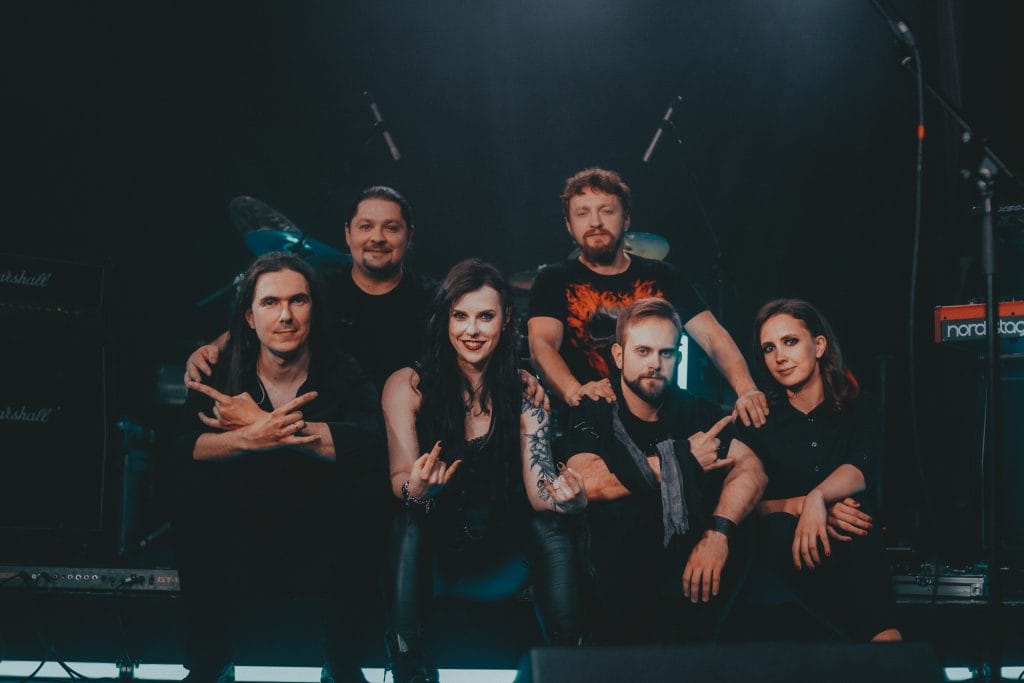
- El line-up de Belle Morte es muy estable, con una clara distribución de roles. ¿Cómo manejan la dinámica interna y la dirección creativa al tener que negociar el espacio para las colaboraciones externas con músicos invitados?
En la etapa inicial, generalmente creamos el primer borrador del arreglo como un dúo, los dos, Belle y Sergey. Una vez que tenemos una dirección clara, se lo presentamos al resto de la banda y lo refinamos juntos hasta que todos sientan que está bien. Esto nos ayuda a evitar el caos en las etapas iniciales.
Al trabajar con músicos invitados, solemos proporcionar referencias y orientación, pero siempre les damos libertad para reinterpretar o ajustar sus partes. Ver cómo sus ideas elevan las canciones es siempre una experiencia increíble. Cada colaborador aportó algo mágico a este disco.
Considerando la profundidad lírica de vuestros conceptos, ¿cuál es el libro, novela o mito que aún no han explorado musicalmente, pero que creen que sería el material perfecto para un futuro álbum conceptual?
El nombre de nuestra banda fue inspirado por la serie de libros de Anita Blake, por lo que creemos que sería una base perfecta para un futuro álbum conceptual. Tiene vampiros, hombres lobo, nigromancia y muchas otras cosas que resuenan con nuestra estética.
El videoclip de «Jorōgumo» fue clave para el tema. ¿Teneis planes de acompañar otros temas de «Pearl Hunting» con un fuerte componente visual, manteniendo el estándar que establecieron con sus videos anteriores?
Lo más probable es que no. «Pearl Hunting» ya cuenta con cuatro videoclips y tres lyric videos. Los próximos videos que creemos serán casi con certeza para material nuevo, pero definitivamente mantendremos el estándar 🙂
Si pudieran elegir a un artista para llevar a cabo una colaboración «imposible» con Belle Morte (alguien fuera del mundo del metal), ¿quién sería y qué tipo de instrumento o sonido aportaría a su música?
Sergey: Sería increíblemente genial grabar una pista con un coro georgiano. Un coro georgiano es algo absolutamente alucinante, casi cósmico. Crear una poderosa pista de metal con panduri y un coro tradicional georgiano es el sueño.
Ilya P: Apoyo totalmente a Sergey. Un coro georgiano sería increíble, así como la Orquesta Sinfónica de Londres.
Belle: Mi lista es amplia, pero lo primero que me vino a la mente fue el proyecto taiwanés Dharma, que combina sutras budistas con death metal. Pero como eso sigue estando relacionado con el metal, elegiría a Tori Amos. Es una artista fenomenal y me encantaría crear algo juntas.
- Vuestro nombre significa ‘Beautiful Death’ (Muerte Hermosa). Si pudieran componer la banda sonora para una escena de muerte mitológica o literaria que encarne perfectamente el sonido de Belle Morte, ¿cuál elegiríais?
Esa es una gran pregunta, y probablemente nos la llevaríamos para pensarla mejor, ¿quién sabe a dónde nos podría llevar la respuesta? ¿Quizás la muerte de Boromir de El Señor de los Anillos (LOTR)?
Finalmente, después de alcanzar esta ambiciosa meta con «Pearl Hunting», que redefine el Folk Metal, ¿cuál es el siguiente «territorio inexplorado» musical que Belle Morte quiere conquistar?
Eso es algo que descubriremos en el camino. Componer para nosotros es siempre un viaje exploratorio, y el destino final no se conoce desde el principio. Ahora mismo, el nuevo material se siente más oscuro, más pesado y más conectado temáticamente. Pero no estamos cerrando la puerta a las colaboraciones. Después de trabajar tanto con instrumentos étnicos, volver a un enfoque puramente tradicional parece un poco aburrido.
Redes Sociales
Facebook: www.facebook.com/bellemortemusic
Instagram: www.instagram.com/bellemorteofficial
Bandcamp: bellemorte.bandcamp.com
Youtube: www.youtube.com/@bellemortemusic
The Belarusian band Belle Morte doesn’t just play Gothic Symphonic Metal; they redefine the genre by turning it into a crucible of cultures. After exploring obsession on their concept album «Crime of Passion», they now embark on a worldwide journey with «Pearl Hunting» (January 2025). This ambitious work fuses the power of dark metal with traditional instruments from Japan, Peru, Armenia, and beyond, as evidenced by their epic single «Jorōgumo». Today, we delve deeper with Belle Morte into the challenges and rewards of this global vision, their perspective on the underground scene, and what «Pearl Hunting» truly means for their artistic evolution.
- Belle Morte has always merged Gothic Symphonic Metal, but «Pearl Hunting» promises a global approach by integrating traditional instruments from Mongolia, Japan, Peru, and more. How did you logistically and artistically manage such an ambitious international collaboration?
It was definitely an organic evolution. Honestly, if we had known from the start how many people we would need to find, coordinate, and bring on board, we might not have dared to attempt something like this.
At first, we only planned to create a few songs with folk elements because each of us had a favorite traditional instrument we wanted to work with. Logistically, it wasn’t always easy, especially with collaborators spread across different countries and time zones. But artistically, it was pure joy. Every musician understood the emotional core of the song and contributed in a way that strengthened it rather than overshadowing it.
As the process unfolded, we realized we already had enough material for an EP. The more we recorded, the more ideas appeared, and the more instruments we wanted to include. Before we even noticed, we were holding a full-length album in our hands.
- The single «Jorōgumo» is a masterful union of Dark Heavy Metal with koto, shamisen, and shakuhachi, inspired by Japanese folklore. How does the band ensure the cultural authenticity and respect when incorporating instruments from such specific traditions?
When you blend something as culturally specific and deep as traditional Japanese instruments with a gothic metal foundation, the first step is full immersion. You have to study the instruments, understand how they are played, what feels natural for them, and what absolutely doesn’t. But no amount of listening or reading can replace real experience, and if you don’t play these instruments yourself, there will always be nuances you might miss.
That’s where our Japanese collaborators become essential. They help us stay respectful and authentic while still being creative. Sometimes they tell us, “This line is perfect, keep it as is,” and sometimes the feedback is, “No one would ever play it like that, let’s rethink it.” From there, new ideas start to flow, like doubling the shamisen with koto an octave higher or reshaping a melody so it feels more natural while still supporting the metal foundation.
So it’s a very collaborative process where the cultural knowledge and experience of the guest musicians directly influences the final shape of the song.
- The previous album, «Crime of Passion», was a Dark Metal concept album inspired by John Fowles’ «The Collector». In contrast, what does the search for pearls («Pearl Hunting») represent as a metaphor for the new album and its spiritual and musical exploration?
The idea of “pearl hunting” became a metaphor for the creative process behind this album. It truly felt like we were searching for hidden gems across different cultures and traditions. Sometimes we would literally open a map and explore regions for inspiration, discovering what unique sounds they could contribute. Every collaboration and every instrument turned into its own pearl, something rare and precious that enriched the entire album.
- Tracks like «Blame Me» incorporate the melancholic Armenian duduk. How do you decide which ethnic instrument is the most appropriate to evoke the lyrical and emotional atmosphere of a particular song?
Usually, the song itself tells us what it needs. When Sergey heard the early demo of Blame Me, he immediately knew that the Armenian duduk was the instrument that could express its emotional depth. The duduk’s heartbreaking, aching tone matched the mood instantly.
In most cases, we write from the emotional core first, and then we ask ourselves: “Which instrument could express this feeling better than we can with our usual setup?”
- «Pearl Hunting» explores stories of mythical beings, vampires, and ancient legends. Which of the album’s 11 tracks do you feel most boldly captures the fusion of your gothic symphonic sound with a specific traditional instrument?
It is hard to single out just one track because each song is its own unique blend of metal and traditional instruments. «Black Waters» stands out as the most experimental, especially since we haven’t heard Indonesian instruments used in metal in this way. «Blame Me» is another distinct fusion, combining Armenian duduk with subtle jazz elements. We are proud of how these unexpected combinations worked out.
- On «Crime of Passion», you explored djent/progressive elements and even some black metal. Are these more extreme influences still present in the new material, or has the focus on ethnic instruments softened the overall sound?
«Pearl Hunting» is even more eclectic than «Crime of Passion». There is a strong progressive-metal influence in «Blame Me», «Willow», «Exorcism», and even parts of «Jorogumo». «Jorogumo» also has clear black-metal elements. And even «Krew», despite its dramatic and lyrical mood, has a small extreme-metal section. So no, we didn’t soften the sound. If anything, we expanded it even further.
- You have signed with Wormholedeath. How do you assess the current health of the Symphonic and Gothic Metal scene in the European Underground? Do you believe independent labels are succeeding in breaking the barrier of traditional genres?
We never analyzed it in depth, but it feels like symphonic and gothic metal exist more as niche genres. Their audience is smaller compared to, for example, black Metal or metalcore, which currently seem to be more dominant in the heavy music scene. Independent labels definitely help lesser-known bands reach their listeners, but in the end, it is always a combination of factors that determines whether the music resonates with real people.
- Folk Metal has sometimes been criticized for becoming predictable. Do you believe Belle Morte’s focus on global folklore, rather than concentrating solely on Slavic or Norse folklore, is a way to innovate and keep the genre fresh?
We believe so. Some of our tracks do use more familiar combinations from northern or Celtic traditions, but many others venture into less explored areas, like Indonesian suling and gamelan. These instruments bring something unexpected, which keeps the music exciting both for us and, hopefully, for the listeners.
- From the perspective of a Belarusian band, how have geopolitics and geographical barriers affected promotion, international collaboration, and touring in the European Extreme Metal circuit?
Most of our collaborations happened remotely. In a way, the COVID era trained us well for that. In 2021, we were living in three different countries. Now we are based in Poland, which definitely makes logistics easier. But the paperwork is still complicated, and unfortunately, it sometimes affects our ability to tour.
- As a band that uses Symphonic Metal as its foundation, what is your take on the growing trend of Black Metal and Death Metal bands incorporating complex orchestrations or symphonic elements into their work?
We love symphonic elements, so when they are used meaningfully and not just as decoration, we fully support that trend. But when we listen to music, we don’t dissect it into genre components or think analytically about arrangements. We just listen and enjoy good music. The rest is secondary.
- Belle Morte’s lineup is very stable, with a clear distribution of roles. How do you manage the internal dynamic and creative direction while having to negotiate space for external collaborations with guest musicians?
At the initial stage, we usually create the first draft of the arrangement as a duo, the two of us, Belle and Sergey. Once we have a clear direction, we bring it to the rest of the band and refine it together until everyone feels it is right. This helps us avoid chaos in the early stages.
When working with guest musicians, we usually provide references and guidance, but we always give them freedom to reinterpret or adjust their parts. Seeing how their ideas elevate the songs is always an incredible experience. Every collaborator brought something magical to this record.
- Considering the lyrical depth of your concepts, what is the book, novel, or myth that you have not yet explored musically, but believe would be the perfect material for a future concept album?
Our band name was inspired by the Anita Blake book series, so we feel it would be a perfect foundation for a future concept album. It has vampires, werewolves, necromancy, and many other things that resonate with our aesthetic.
- The music video for «Jorōgumo» was key to the track. Do you plan to accompany other tracks from «Pearl Hunting» with a strong visual component, maintaining the standard you established with your previous videos?
Most likely not. «Pearl Hunting» already has four music videos and three lyric videos. The next videos we create will almost certainly be for new material, but we’ll definitely maintain the standard 🙂
- If you could choose an artist for an «impossible» collaboration with Belle Morte (someone outside the metal world), who would it be, and what type of instrument or sound would they bring to your music?
Sergey: It would be insanely cool to record a track with a Georgian choir. A Georgian choir is something absolutely mind-blowing, almost cosmic. Creating a powerful metal track with panduri and a traditional Georgian choir is the dream.
Ilya P: I fully support Sergey. A Georgian choir would be amazing, as well as the London Symphony Orchestra.
Belle: My list is broad, but the first thing that came to mind was the Taiwanese project Dharma, which combines Buddhist sutras with death metal. But since that is still metal-related, I would choose Tori Amos. She is a phenomenal artist, and I would love to create something together.
- Your name means ‘Beautiful Death’. If you could compose the soundtrack for one mythological or literary death scene that perfectly embodies the Belle Morte sound, which one would you choose?
That’s actually a great question, and we’d probably take it with us to think about it more – who knows where the answer could bring us? Maybe Boromir’s death from LOTR?
- Finally, after achieving this ambitious goal with «Pearl Hunting», which redefines Folk Metal, what is the next musical «unexplored territory» that Belle Morte aims to conquer?
That is something we will discover along the way. Composing for us is always an exploratory journey, and the final destination isn’t known from the start. Right now, the new material feels darker, heavier, and more thematically connected. But we are not closing the door to collaborations. After working so much with ethnic instruments, returning to a purely traditional approach seems a bit too boring.