







(English Below)
Cuando una obra gestada durante cuatro años (2022–2026) aterriza en los monitores de estudio bajo el manto de un sello tan curado como Ardua Music, la tentación inicial del oyente habituado al subgénero es esperar una sucesión previsible de acordes menores suspendidos, tempos arrastrados y guturales sepulcrales al uso. Sin embargo, el tercer larga duración de los estadounidenses Somnent, «Heirloom», plantea una arquitectura emocional y tímbrica que se desmarca de la mera liturgia lúgubre para adentrarse en un terreno mucho más incómodo: la anatomía del trauma familiar heredado.
Ficha Técnica
Artista: Somnent
Álbum: «Heirloom»
Sello: Ardua Music
Fecha de lanzamiento: 30 de octubre de 2026
Género: Melodic Doom/Death Metal
Para fans de: Officium Triste, Novembers Doom, Marche Funèbre, Katatonia
Desde la sede de Orlando, Florida -una geografía históricamente vinculada al death metal más técnico y abrasivo, antítesis climática y espiritual de la penumbra invernal-, el multiinstrumentista Giovanni Antonio Vigliotti lleva desde 2015 esculpiendo un lenguaje propio. Si en sus entregas anteriores («Gardens Of Memory» o «Ashes From A Dying Flame») la formación ya exhibía una notable solvencia para equilibrar la pesadez rítmica con el lirismo melódico, aquí se percibe una depuración quirúrgica de los recursos expresivos. No hay relleno ornamental ni concesiones al espectáculo pirotécnico; cada decisión de arreglo responde a una necesidad dramática concreta.
La apertura con «A Voice Of Inner Child» funciona como un umbral de descompresión acústica y psicológica. Lejos de arrancar con la muralla de distorsión reglamentaria, Vigliotti cede el protagonismo inicial a la voz etérea y espectral de Natalia Drepina (Mourneress), quien además firma la lírica del corte. La mezcla en este arranque privilegia el aire alrededor de la voz y las reverberaciones largas, generando una sensación de espacio vacío, casi clínico, que ilustra con precisión el concepto de la infancia vulnerada. Cuando la instrumentación comienza a ganar cuerpo, el tránsito hacia «Throne Aflame» se produce sin costuras abruptas, como una marea que sube de forma inexorable hasta cubrir el paisaje.
En «Throne Aflame» es donde se aprecia por primera vez en toda su extensión la ingeniería de tono del disco. Las guitarras rítmicas operan sobre un registro grave denso pero sorprendentemente articulado, permitiendo que cada power chord mantenga su definición armónica incluso cuando los tempos caen por debajo de los 70 BPM. Sobre esa base monolítica, las líneas solistas emergen con un fraseo limpio,cargado de sustain y un uso medido del delay que remite directamente a la escuela europea de los noventa -pensemos en la etapa intermedia de Katatonia o en la sobriedad narrativa de Officium Triste-, pero despojado de cualquier afectación gótica teatral. El estribillo se eleva mediante un cambio de registro vocal de Vigliotti hacia líneas limpias baritonales,contenidas y desprovistas de vibratos exagerados, lo que refuerza la verosimilitud del discurso.
Gran parte de la prensa especializada tiende a celebrar el doom/death melódico únicamente por su capacidad de generar catarsis lacrimógena o por la «belleza triste» de sus melodías. Ese enfoque resulta insuficiente para evaluar «Heirloom». Lo que distingue a este trabajo no es su melancolía superficial, sino su tensión estructural. En cortes como «Severed Ties» y «King Of Ruin», la sección rítmica conformada por Shane Dohmen al bajo y Alejandro Acuña a la batería ejerce un contrapeso físico indispensable. El bajo no se limita a doblar la tónica de las guitarras; aporta un gruñido metálico en los medios-graves que ancla la mezcla y otorga tracción a los pasajes más estáticos. Por su parte, Acuña demuestra una comprensión magistral de la micro-dinámica: sus golpes de caja poseen una pegada seca y orgánica, sin el exceso de trigger que suele plastificar las producciones modernas, mientras que su trabajo de platos -especialmente en los crescendos de ride y crash- administra la tensión con paciencia de relojero.
En «King Of Ruin», la intervención vocal adicional de Dust Of Reason introduce una fricción tímbrica que enriquece la paleta del álbum. Los guturales de Vigliotti, profundos y cavernosos pero perfectamente inteligibles en su dicción,dialogan con texturas vocales más rasgadas, generando una dualidad que refleja la lucha interna entre la sumisión al legado tóxico y el impulso de ruptura. Este contraste alcanza su punto de máxima densidad emocional y compositiva en el eje central del disco, ocupado por «Barren Mother».
«Barren Mother» es la pieza angular de «Heirloom» y la prueba definitiva de la madurez compositiva de Somnent. Su desarrollo extenso no responde a un capricho de duración, sino a una narrativa en varios actos. Los arpegios iniciales,desnudos y fríos, establecen un motivo melódico que mutará a lo largo del tema, atravesando pasajes de una pesadez tectónica hasta desembocar en secciones de una fragilidad casi camerística. Aquí es donde las colaboraciones externas -con aportaciones puntuales de Jari Lindholm y Julian Lefler– terminan de cobrar sentido, añadiendo capas armónicas sutiles en el fondo del campo estéreo que amplían la profundidad de campo sin saturar el primer plano. La compresión aplicada al master respeta el rango dinámico de estas transiciones: cuando la banda entra al unísono tras un pasaje silencioso, el impacto físico es real porque la mezcla no ha sido aplastada previamente en la sala de control.
A medida que el álbum avanza hacia su tramo final con «Where Silence Dwells» y «As You’ve Sown», el discurso musical se vuelve más introspectivo y austero. «Where Silence Dwells» explora el silencio no como ausencia de sonido, sino como una presencia opresiva entre los acordes, utilizando pausas medidas y notas sostenidas que se extinguen lentamente hasta rozar el umbral de audición. Es un ejercicio de contención que muchos grupos del género evitan por temor a perder la atención del oyente, pero que aquí funciona como el respiro necesario antes de la resolución. En «As You’ve Sown», el pulso rítmico recupera cierta urgencia contenida; las guitarras dobladas en terceras y sextas recuperan el espíritu más combativo de Marche Funèbre o Novembers Doom, recordándonos que la aceptación del duelo no implica pasividad, sino el reconocimiento lúcido de las cicatrices propias.
El cierre con «The Feeding Hand» sintetiza todas las vertientes exploradas durante la escucha. Los riffs principales poseen una solidez granítica, sostenidos por una línea de bajo sinuosa y una batería que empuja con determinación. Sin embargo,es el trabajo solista de guitarra en la segunda mitad del tema el que eleva la pieza a otro plano: lejos de recurrir al virtuosismo escalar gratuito, Vigliotti construye un solo cantable, cargado de bendings expresivos y resolución melódica,que actúa como epílogo emocional de toda la obra. La voz, rasgada hasta el límite de la quiebra en los compases finales,cierra el círculo temático de un álbum que entiende la herencia emocional no como una condena perpetua, sino como un peso que, una vez nombrado y diseccionado, puede finalmente depositarse en el suelo.
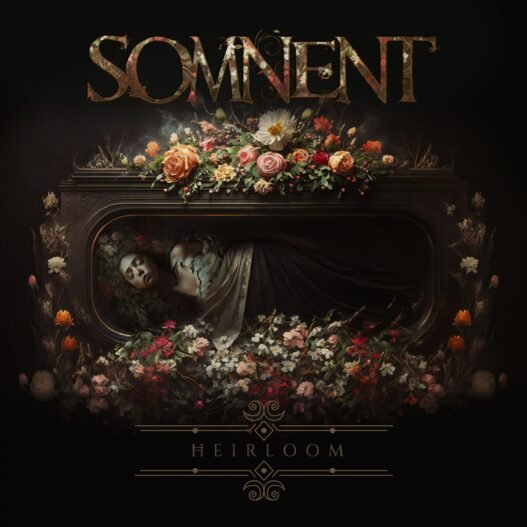
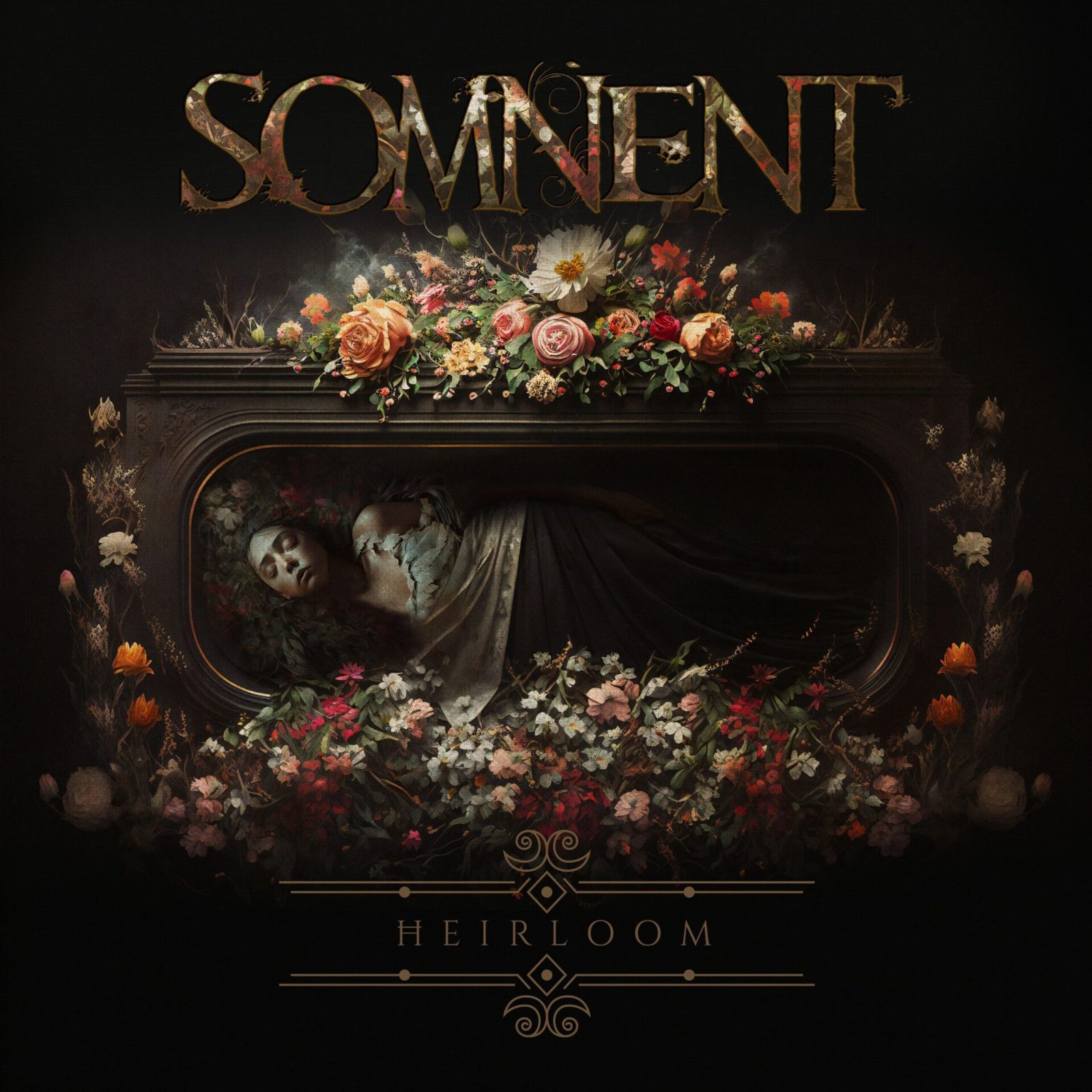
Visualmente, la portada diseñada por Augusto Peixoto (Iron Doom Design) traduce con fidelidad esa paleta de grises sepulcrales y luz crepuscular que define el audio, evitando los clichés iconográficos más obvios del metal extremo en favor de una simbología sobria y evocadora.
Con todo, «Heirloom» no está exento de puntos de fricción para el oyente menos paciente. Su ritmo deliberadamente pausado y su negativa a ofrecer ganchos inmediatos o cambios de tempo vertiginosos exigen una escucha activa y sin distracciones; quien busque la inmediatez del death/doom más orientado al riff directo puede percibir cierta linealidad en el tramo intermedio entre «Severed Ties» y «Where Silence Dwells», donde la similitud de registros armónicos exige atención al detalle tímbrico para apreciar sus matices. Asimismo, el registro vocal limpio de Vigliotti, aunque honesto y perfectamente integrado en el carácter íntimo de la obra, posee un rango expresivo acotado que en momentos puntuales podría beneficiarse de una mayor proyección dinámica.
Puntuación: 8,5 / 10
Pese a estas leves reservas, Somnent ha firmado un trabajo de una coherencia interna envidiable, respaldado por una producción cristalina y orgánica que honra la tradición del doom/death melódico mientras actualiza su pertinencia emocional. Un disco honesto, exigente y profundamente humano que consolida a la formación de Orlando como una de las voces más lúcidas de la escena contemporánea.
Tracklist
«A Voice Of Inner Child»
«Throne Aflame»
«Severed Ties»
«King Of Ruin»
«Barren Mother»
«Where Silence Dwells»
«As You’ve Sown»
«The Feeding Hand»
Formación
Giovanni Antonio Vigliotti: Voz, guitarras
Shane Dohmen: Bajo
Alejandro Acuña: Batería
Colaboraciones en estudio:
Natalia Drepina (Mourneress): Voz invitada y letras en «A Voice Of Inner Child»
Dust Of Reason: Voces adicionales en «King Of Ruin»
Jari Lindholm: Contribuciones adicionales
Julian Lefler: Contribuciones adicionales
Multimedia
Redes sociales
Bandcamp: https://somnent.bandcamp.com/
Facebook: https://www.facebook.com/somnent
Instagram: https://www.instagram.com/somnent_official
When a work crafted over four years (2022–2026) lands on studio monitors under the banner of a label as carefully curated as Ardua Music, the initial temptation for a listener accustomed to the subgenre is to expect a predictable succession of suspended minor chords, dragging tempos, and run-of-the-mill sepulchral growls. However, the third full-length album by the Americans Somnent, «Heirloom», sets out an emotional and timbral architecture that steps away from mere lugubrious liturgy to enter much more uncomfortable territory: the anatomy of inherited family trauma.
From their base in Orlando, Florida -a geography historically linked to more technical and abrasive death metal, the climatic and spiritual antithesis of winter gloom- multi-instrumentalist Giovanni Antonio Vigliotti has been sculpting a language of his own since 2015. If on previous releases («Gardens Of Memory» or «Ashes From A Dying Flame») the project already showed remarkable poise in balancing rhythmic heaviness with melodic lyricism, here there is a surgical refinement of expressive resources. There is no ornamental filler or concessions to pyrotechnic spectacle; every arrangement decision answers to a concrete dramatic need.
Opening with “A Voice Of Inner Child” works as a threshold of acoustic and psychological decompression. Far from launching with the customary wall of distortion, Vigliotti cedes the initial spotlight to the ethereal, spectral voice of Natalia Drepina (Mourneress), who also writes the lyrics for the track. The mix at this opening privileges the air around the voice and long reverbs, generating a sense of empty, almost clinical space that accurately illustrates the concept of a wounded childhood. When the instrumentation begins to gain body, the transition into “Throne Aflame” happens without abrupt seams, like a tide rising inexorably until it covers the landscape.
In “Throne Aflame” is where the album’s tone engineering can be appreciated for the first time in full. The rhythm guitars operate in a dense yet surprisingly articulated low register, allowing every power chord to keep its harmonic definition even when tempos drop below 70 BPM. Over that monolithic foundation, lead lines emerge with clean phrasing, loaded with sustain and a measured use of delay that points directly to the nineties European school -think of Katatonia‘s middle era or the narrative sobriety of Officium Triste- but stripped of any theatrical gothic affectation. The chorus rises through a vocal register shift from Vigliotti into clean baritone lines, restrained and devoid of exaggerated vibrato, which reinforces the credibility of the discourse.
Much of the specialized press tends to celebrate melodic doom/death solely for its capacity to generate tearful catharsis or for the «sad beauty» of its melodies. That approach falls short when evaluating «Heirloom». What sets this work apart is not its superficial melancholy, but its structural tension. On tracks like “Severed Ties” and “King Of Ruin”, the rhythm section formed by Shane Dohmen on bass and Alejandro Acuña on drums provides an indispensable physical counterweight. The bass does not limit itself to doubling the guitars’ root notes; it brings a metallic growl in the low-mids that anchors the mix and gives traction to the most static passages. For his part, Acuña shows a masterful grasp of micro-dynamics: his snare hits have a dry, organic punch, without the excess trigger that often plasticizes modern productions, while his cymbal work -especially in ride and crash crescendos- manages tension with clockmaker patience.
In “King Of Ruin”, the additional vocal contribution from Dust Of Reason introduces a timbral friction that enriches the album’s palette. Vigliotti‘s growls, deep and cavernous yet completely intelligible in their diction, dialogue with more raspy vocal textures, creating a duality that reflects the internal struggle between submission to a toxic legacy and the impulse to break free. This contrast reaches its peak of emotional and compositional density at the central axis of the record, occupied by “Barren Mother”.
“Barren Mother” is the cornerstone piece of «Heirloom» and definitive proof of Somnent‘s compositional maturity. Its extended development does not stem from a whim of runtime, but from a multi-act narrative. The opening arpeggios, bare and cold, establish a melodic motif that will mutate throughout the song, crossing passages of tectonic heaviness until flowing into sections of almost chamber-like fragility. Here is where external collaborations -with targeted contributions from Jari Lindholm and Julian Lefler- fully make sense, adding subtle harmonic layers in the back of the stereo field that widen depth of field without saturating the foreground. The compression applied to the master respects the dynamic range of these transitions: when the band comes in unison after a silent passage, the physical impact is real because the mix has not been crushed beforehand in the control room.
As the album moves toward its closing stretch with “Where Silence Dwells” and “As You’ve Sown”, the musical discourse becomes more introspective and austere. “Where Silence Dwells” explores silence not as the absence of sound, but as an oppressive presence between chords, using measured pauses and sustained notes that fade slowly until brushing the threshold of audibility. It is an exercise in restraint that many acts in the genre avoid for fear of losing the listener’s attention, but here it works as the necessary breath before resolution. In “As You’ve Sown”, the rhythmic pulse recovers a certain contained urgency; guitars doubled in thirds and sixths bring back the more combative spirit of Marche Funèbreor Novembers Doom, reminding us that accepting grief does not mean passivity, but the lucid recognition of one’s own scars.
Closing with “The Feeding Hand” synthesizes all the facets explored during the listen. The main riffs have a granitic solidity, backed by a sinuous bassline and drums that push with determination. However, it is the lead guitar work in the second half of the track that elevates the piece to another plane: far from resorting to gratuitous scale virtuosity, Vigliotti builds a singable solo, full of expressive bends and melodic resolution, that acts as an emotional epilogue to the entire work. The vocals, raspy to the point of breaking in the final bars, close the thematic circle of an album that understands emotional inheritance not as a perpetual sentence, but as a weight that, once named and dissected, can finally be set down on the ground.
Visually, the cover art designed by Augusto Peixoto (Iron Doom Design) faithfully translates that palette of sepulchral grays and twilight light that defines the audio, avoiding the most obvious iconographic clichés of extreme metal in favor of sober, evocative symbolism.
All in all, «Heirloom» is not without friction points for the less patient listener. Its deliberately unhurried pace and refusal to offer immediate hooks or dizzying tempo changes demand active, distraction-free listening; anyone looking for the immediacy of more direct-riff-oriented death/doom may perceive a certain linearity in the middle stretch between “Severed Ties” and “Where Silence Dwells”, where similar harmonic registers call for attention to timbral detail to appreciate its nuances. Likewise, Vigliotti‘s clean vocal register, though honest and seamlessly integrated into the intimate character of the work, has a bounded expressive range that in specific moments could benefit from greater dynamic projection.
Score: 8.5 / 10
Despite these slight reservations, Somnent has delivered a work of enviable internal coherence, backed by a crystal-clear, organic production that honors the tradition of melodic doom/death while updating its emotional relevance. An honest, demanding, and deeply human record that consolidates the Orlando project as one of the clearest voices on the contemporary scene.