



(English Below)
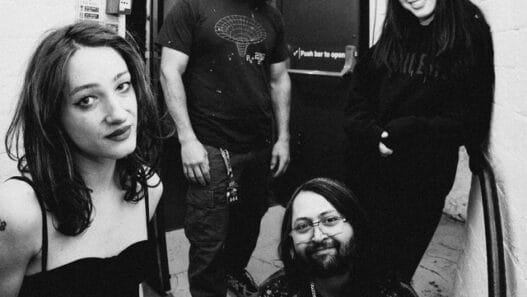
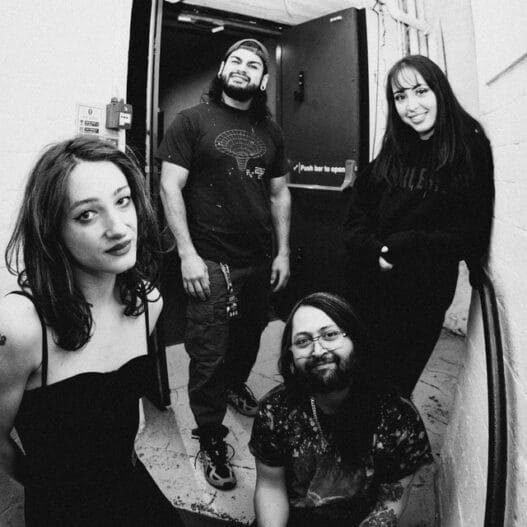
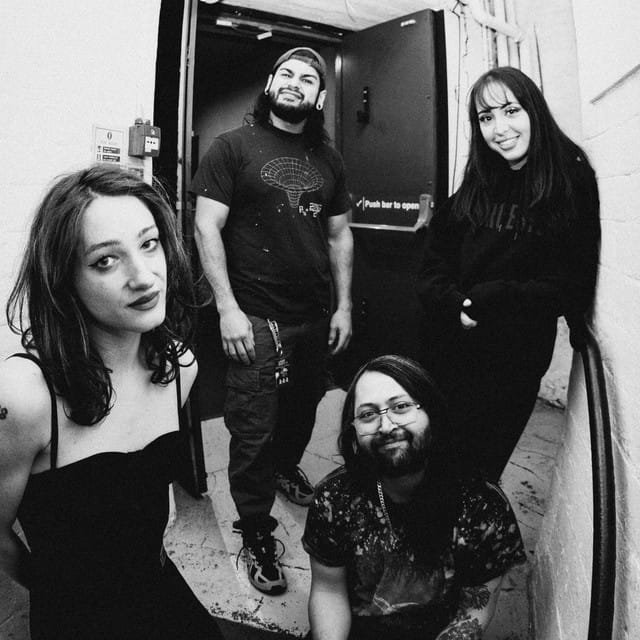
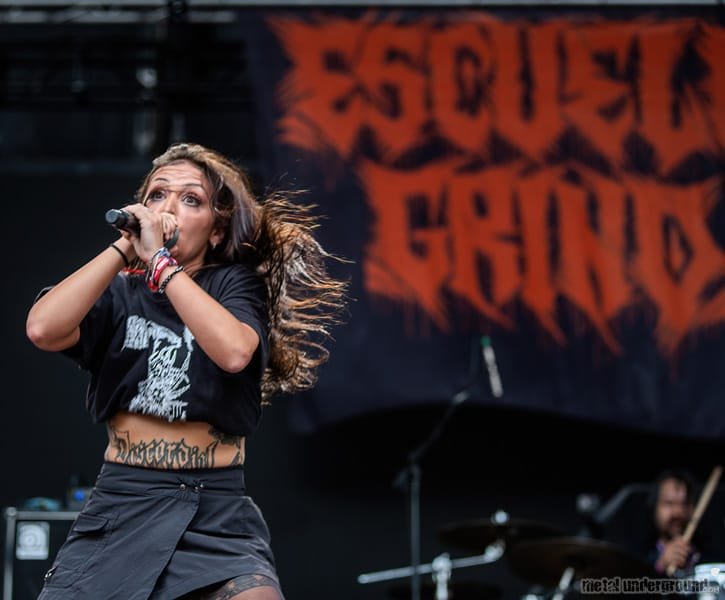
El Grindcore está listo para golpear con fuerza la capital una vez más. El próximo 26 de junio, gracias al Madrid DeathFest, la banda estadounidense Escuela Grind desatará su violencia sonora en Madrid. Hablamos con la banda sobre su música, su actitud y qué podemos esperar de uno de los directos más salvajes de la escena actual.
- Para aquellos que aún no os tengan en su radar, ¿cómo definiríais a Escuela Grind en pocas palabras?
Death Metal / Hardcore / Grindcore que es divertido.
- Vuestra música mezcla grindcore, hardcore y metal extremo. ¿cómo surgió ese sonido y qué influencias hay detrás?
Metimos todo lo que amamos en una licuadora: powerviolence, death metal, hardcore de los 90, e incluso algunos trucos de producción de hip-hop. Nuestras influencias van desde artistas como Prince hasta Slipknot y Gorguts. El objetivo era la violencia con dinámicas reales.
- Vuestras letras transmiten mucha rabia y crítica. ¿Qué temas os inspiran al escribir?
Política de izquierdas, derechos humanos, existencialismo y el caos que se produce cuando los humanos se juntan. «El concepto de Dios solo existe gracias a las personas». Soy arquitecto de profesión, así que me encanta investigar filosofía – Michel Foucault, John Locke, Platón – para nutrir nuestras letras sobre identidad y trauma.
- Aunque sois de Massachusetts, elegisteis un nombre en castellano como Escuela Grind. ¿De dónde viene y qué significa para vosotros?
Era simplemente la letra de una canción y pensamos que sonaba genial. Literalmente se traduce como «Grind School».
- ¿Qué ha cambiado en la banda desde vuestros inicios hasta ahora?
Empezamos como tres personas con algunos instrumentos y un sueño en la pequeña ciudad universitaria de Ithaca, Nueva York. Ahora tenemos una formación sólida, hemos trabajado con el productor Kurt Ballou y hemos aprendido exactamente cómo hacer que el público se mueva.
- “Dreams on Algorithms” ha sido muy bien recibido. ¿Qué representa este lanzamiento para vosotros?
Trata sobre cómo es consumir en esta era: lo que recibimos a través de nuestros teléfonos, el panorama de las redes sociales y los algoritmos personalizados, y cómo eso es interpretado por nuestro subconsciente. Lo escribimos mientras estábamos de gira, así que, por primera vez, sabíamos cómo reaccionaba la gente antes incluso de grabarlo.
- ¿Cómo es vuestro proceso de composición? ¿Es tan caótico como parece o está más estructurado de lo que la gente piensa?
Escribí gran parte del último álbum en el asiento de la furgoneta, conectado a la entrada auxiliar. Hay estructura -no somos salvajes-, pero dejamos espacio para que las ruedas se salgan del eje.
En el pasado, la mayoría de las canciones se escribían sobre partes de batería. Todo el EP «Indoctrination» tenía pistas de batería improvisadas y los riffs se escribieron sobre ellas. La estructura empezó con «Memory Theater», cuando comenzamos a centrarnos más en los riffs, pero incluso así no nos alejamos de la fórmula original porque es el aspecto del powerviolence que probablemente se quede en la banda para siempre. Si alguien en el grupo escribe un riff genial, lo usamos y construimos alrededor de él, tal como en «Ball and Chain».
- El directo es una parte clave de vuestro estilo. ¿Qué importancia tiene para vosotros y cómo lo afrontáis?
Nos damos cuenta de que el público aprecia un buen espectáculo sin importar qué tan bien suenes. Prefieren verte meter la pata en una canción y seguir adelante que verte parado tocando de forma perfecta. Abrazamos totalmente ese aspecto del show en vivo, así que tenemos la suerte de que además suene bien. Estamos allí para pasarlo bien con la audiencia.
- El 26 de junio tocaréis en Madrid. ¿Qué expectativas tenéis para este concierto?
Tocamos en Madrid con Napalm Death en 2023 y fue intenso. Esperamos más de ese fuego. Los pits de Madrid son duros y nosotros nos alimentamos de esa energía. Esperad sudor, ruido y al menos a una persona haciendo un stage-diving dentro de un cubo de basura.
- ¿Qué puede esperar el público de Madrid de vuestra actuación?
Máxima violencia, cero descansos. Canciones nuevas, canciones viejas y quizá alguna versión que no tenga ningún sentido. Os iréis agotados y felices. Se sabe de gente que ha hecho twerk, volteretas y ha barrido el suelo en nuestros pits; bailad como os dé la gana.
- ¿Qué significa para vosotros tocar en España y conectar con el público de aquí?
Es enorme. El público español tiene un fuego especial: escuchan, pero también destruyen. Y el nombre «Escuela» suena diferente aquí. Se siente como volver a casa a un lugar en el que nunca hemos estado.
- ¿Cómo veis la escena actual del grindcore y el metal extremo a nivel mundial?
Es un espacio saludable para que la gente se suelte y se desahogue. La comunidad puede volverse loca junta, celebrando música caótica que suena como el estado actual del mundo. Aunque el grindcore y el death metal no sean música de estadios, están PROSPERANDO.
- ¿Qué planes tenéis para el resto de 2026?
Tenemos una gira europea de primavera por la República Checa, Polonia, Alemania y el Hellfest en Francia. Y planeamos lanzar material nuevo durante ese tiempo. Definitivamente más caos. 2026 es el año en que llevaremos esto a lugares en los que no hemos estado.
- Para terminar, ¿por qué nadie debería perderse vuestro concierto en Madrid?
Porque querrás decir que viste a Escuela Grind en una sala así de pequeña antes de que nos volviéramos demasiado ruidosos para ella. Además, porque la vida es corta y esto es más barato que la terapia. Nos vemos en el pit.
Grindcore is set to strike the capital with full force once again. On June 26th, thanks to Madrid DeathFest, the American band Escuela Grind will unleash their sonic violence in Madrid. We spoke with the band about their music, their attitude, and what we can expect from one of the wildest live acts in the scene today.
- For those who don’t have you on their radar yet, how would you define Escuela Grind in just a few words?
Death Metal / Hardcore / Grindcore that is fun.
- Your music blends grindcore, hardcore, and extreme metal. How did that sound come about, and what influences lie behind it?
We threw everything we love into a blender: powerviolence, death metal, 90s hardcore, and even some hip-hop production tricks. Our influences range from artists like Prince to Slipknot and Gorguts. The goal was violence with real dynamics.
- Your lyrics convey a lot of rage and criticism. What themes inspire you when writing?
Left-wing politics, human rights, existentialism, and the chaos that ensues when humans come together. «The concept of God only exists because of people.» I am an architect by trade, so I love researching philosophy—Michel Foucault, John Locke, Plato—to fuel our lyrics on identity and trauma.
- Even though you are from Massachusetts, you chose a Spanish name like Escuela Grind. Where does it come from, and what does it mean to you?
It was simply a lyric from a song and we thought it sounded cool. It literally translates to «Grind School».
- What has changed in the band from your early days until now?
We started as three people with a few instruments and a dream in the small college town of Ithaca, New York. Now we have a solid lineup, we’ve worked with producer Kurt Ballou, and we’ve learned exactly how to get the crowd moving.
- “Dreams on Algorithms” has been very well received. What does this release represent for you?
It’s about what it’s like to consume in this era: what we receive through our phones, the social media landscape, and personalized algorithms, and how that is interpreted by our subconscious. We wrote it while we were on the road, so for the first time, we knew how people were reacting to it before we even recorded it.
- What is your songwriting process like? Is it as chaotic as it seems, or more structured than people might think?
I wrote a lot of the last album in the van seat, plugged into the aux input. There is structure—we aren’t savages—but we leave room for the wheels to come off.
In the past, most songs were written over drum parts. The entire «Indoctrination» EP had improvised drum tracks and the riffs were written over them. The structure began with «Memory Theater» when we started focusing more on the riffs, but even then, we don’t stray from the original formula because it’s the powerviolence aspect that will likely stay in the band forever. If someone in the group writes a cool riff, we use it and build around it, just like in «Ball and Chain».
- The live show is a key part of your style. How important is it to you, and how do you approach it?
We realize that the audience appreciates a good show regardless of how well you sound. They’d rather see you mess up a song and keep going than see you standing still playing perfectly. We fully embrace that aspect of the live show, so we’re just lucky that it happens to sound good too. We are there to have a good time with the audience.
- On June 26th you’ll be playing in Madrid. What are your expectations for this concert?
We played Madrid with Napalm Death in 2023 and it was intense. We expect more of that fire. Madrid pits go hard and we feed off that energy. Expect sweat, noise, and at least one person stage-diving into a trash can.
- What can the Madrid audience expect from your performance?
Maximum violence, zero breaks. New songs, old songs, and maybe a cover that makes no sense. You’ll leave exhausted and happy. People have been known to twerk, do cartwheels, and sweep the floor in our pits; dance however the hell you feel like.
- What does it mean to you to play in Spain and connect with the audience here?
It’s huge. The Spanish crowd has a special kind of fire: they listen, but they also destroy. And the name «Escuela» hits differently here. It feels like coming home to a place we’ve never been.
- How do you see the current grindcore and extreme metal scene worldwide?
It’s a healthy space for people to let loose and decompress. The community can go crazy together, celebrating chaotic music that sounds like the current state of the world. Although grindcore and death metal might not be stadium music, they are THRIVING.
- What plans do you have for the rest of 2026?
We have a spring European tour through the Czech Republic, Poland, Germany, and Hellfest in France. We also plan to release new material during that time. Definitely more chaos. 2026 is the year we take this to places we haven’t been before.
- To wrap things up, why should no one miss your show in Madrid?
Because you’ll want to say you saw Escuela Grind in a room that small before we got too loud for it. Also, because life is short and this is cheaper than therapy. See you in the pit.