






(English Below)
Hay algo en el aire del norte, en esa bruma que baja de los Pirineos y se mezcla con el salitre del Cantábrico, que parece predestinar a sus músicos a una ntrospección muy particular. He pasado las últimas décadas recorriendo estudios, desde los más mugrientos sótanos hasta complejos de alta fidelidad, y si algo he aprendido es que el Black Metal, cuando se despoja de sus disfraces satánicos de cartón piedra y mira hacia el interior del cráneo humano, se convierte en la herramienta artística más poderosa de nuestra era.
Hoy tengo sobre mi mesa el debut de Aschen. Para quienes llevamos tiempo rastreando el underground, el nombre ya nos resultaba familiar tras aquella demo homónima de 2023 que circuló como un secreto a voces entre los buscadores de nuevas texturas. Pero lo que Mikel Telletxea ha gestado aquí, ahora arropado por la solidez de Atauzz al bajo, es un salto al vacío que deja atrás cualquier etiqueta de «banda novel». Este disco no es una carta de presentación; es una declaración de guerra contra la complacencia estética del género.
Ficha Técnica
Artista: Aschen
Álbum: «The Never Ending Search»
Sello: Independiente / Por anunciar
Fecha de lanzamiento: 2026 (Grabado en agosto de 2025)
Género: Post-Black Metal / Atmospheric Black Metal / Doom
Para fans de: Der Weg einer Freiheit, Gaerea, Enslaved, Harakiri for the Sky, Regarde Les Hommes Tomber.
Lo primero que te golpea al escuchar los primeros compases es la calidad de la arquitectura sonora. No es casualidad. La banda se encerró en Atala Studios (donde gente como Willis Drummond o Infest han dejado su huella) durante agosto de 2025. Sin embargo, el movimiento maestro fue enviar las pistas a Fascination Street Studios, en Suecia, para que el legendario Toni Lindgren pusiera sus manos en el máster.
Hablamos del arquitecto sónico detrás de monstruos como Katatonia o Enslaved. Lindgren ha logrado que la agresividad inherente de Aschen no sea un muro de ruido blanco, sino un paisaje con relieve. Puedes sentir el peso del Doom en los pasajes más asfixiantes y la precisión de los blast beats sin que una cosa opaque a la otra. Es un «asalto sónico» de clase mundial, pero con una sensibilidad emocional que solo un veterano sabe pulir.
Uno de los puntos que más me han cautivado de este trabajo es el uso valiente del euskera. Alternar el inglés con su lengua materna no es aquí un ejercicio de folclore barato, sino una necesidad de honestidad. El euskera tiene una fonética ancestral, pétrea, que encaja de forma natural con las armonías disonantes del Post-Black Metal. Escuchar temas como «Sasi Santuaren Amiltzea» te transporta a una dimensión donde el lenguaje se convierte en textura, en una capa más de la instrumentación.
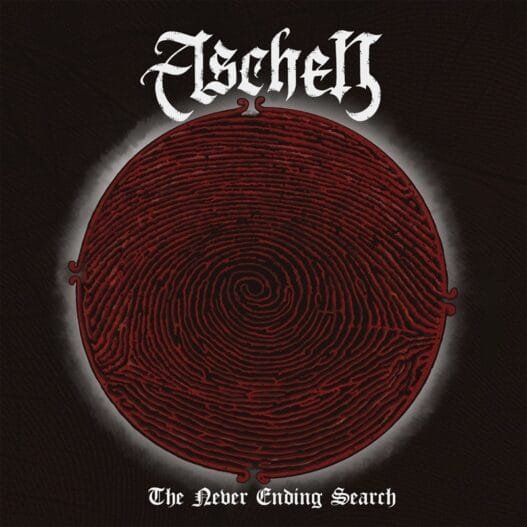
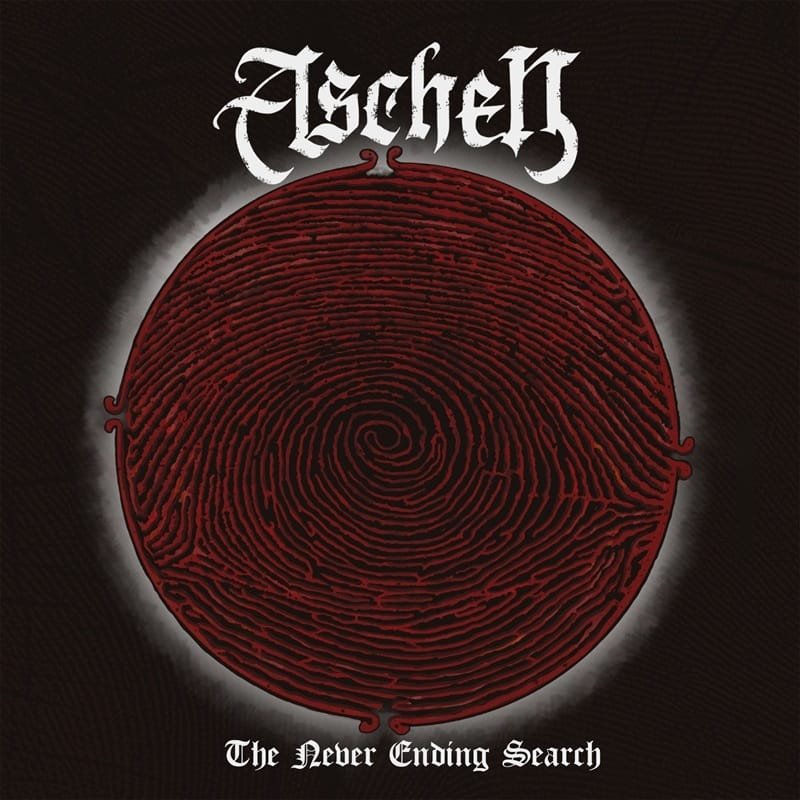
Líricamente, Aschen se aleja de los bosques quemados y las cabras para adentrarse en algo mucho más aterrador: la incapacidad del ser humano para confrontar sus propias fracturas internas. Es un disco sobre el colapso individual reflejado en una sociedad que se pudre y una naturaleza que agoniza. Esa conexión entre el microcosmos (nuestra mente) y el macrocosmo (el mundo) está magistralmente representada en el arte de Mikel Telletxea. Ese laberinto infinito con forma de huellas dactilares superpuestas es la metáfora perfecta: una búsqueda sin salida, hacia adentro y hacia afuera, siempre sin resolución.
El álbum abre con «Sasi Santuaren Amiltzea» (La caída del falso santo). Es una pieza que sirve de brújula: cambios rítmicos constantes, riffs devastadores que de repente se abren a texturas melódicas que te hielan la sangre. Aquí no hay «maldad» genérica, hay angustia real.
En «From the Depths of Decay», la banda demuestra su capacidad para tejer atmósferas densas que recuerdan al Doom más agónico, antes de lanzarse a un torbellino de agresividad cruda. Es esta dualidad la que hace que el disco no agote al oyente; es una marea que sube y baja, manteniéndote siempre en vilo.
Mención especial merece «Azken Arbolak» (Los últimos árboles). Es, quizás, el tema donde la conexión con el entorno natural se hace más evidente. La desesperación por el mundo herido se siente en cada grito de Mikel. No es una queja política, es un lamento existencial.
Llegando al ecuador con «Black Hounds of Justice» y «The Never Ending Search», percibimos la madurez compositiva de la formación. Las líneas de bajo de Atauzz le dan una profundidad orgánica que en la demo solo podíamos intuir. Aquí hay un diálogo entre los instrumentos; el bajo no solo rellena frecuencias, sino que guía muchas de las transiciones más emocionales.
El cierre con «Amal» nos deja con una sensación de vacío buscado. Como el laberinto de la portada, el disco no te ofrece una redención fácil. Te deja ahí, en el centro de tu propia huella dactilar, buscando una salida que quizás no exista.
Tras décadas escuchando bandas que intentan ser «más negras que el abismo», agradezco profundamente encontrarme con músicos que prefieren ser «más humanos que el dolor». Aschen ha firmado un debut que debería situarlos de inmediato en el mapa del metal extremo internacional. Tienen la técnica, tienen la visión artística y, sobre todo, tienen la autenticidad que el género necesita para no morir por repetición.
Puntuacion: 9.3/10
Es un disco que requiere varias escuchas, que te exige atención y que, al final, te recompensa con una profundidad emocional que pocos logran hoy en día. Si este es el nivel de su primer larga duración, el futuro de Aschen se presenta tan brillante como la oscuridad que profesan.
Tracklist
«Sasi Santuaren Amiltzea»
«From the Depths of Decay»
«Azken Arbolak»
«Buried Name»
«Black Hounds of Justice»
«The Never Ending Search»
«The Forsaken Redeemer»
«The Last Glow»
«Amal»
Formación
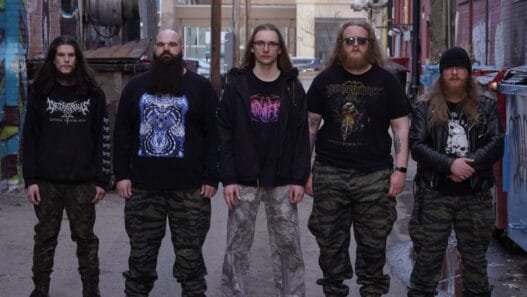
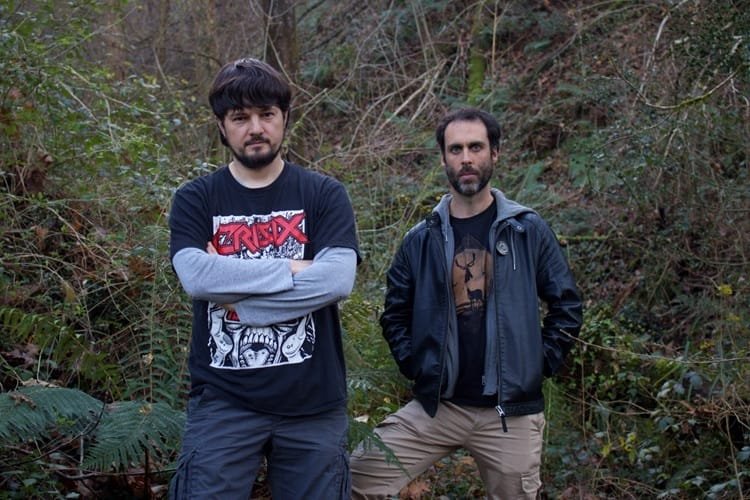
Mikel Telletxea: Voz, Guitarras, Programación y Arte.
Atauzz: Bajo.
Multimedia
Redes Sociales
Bandcamp: https://aschen1.bandcamp.com/
Facebook: https://www.facebook.com/people/Aschen/61556623060502
YouTube: https://www.youtube.com/@aschenband
The first thing that hits you when the opening bars play is the quality of the sonic architecture. This is no accident. The band holed up in Atala Studios (where acts like Willis Drummond and Infest have left their mark) during August 2025. However, the masterstroke was sending the tracks to Fascination Street Studiosin Sweden, placing the master in the hands of the legendary Toni Lindgren.
We are talking about the sonic architect behind behemoths like Katatonia and Enslaved. Lindgren has managed to ensure that Aschen’s inherent aggressiveness isn’t a wall of white noise, but rather a landscape with depth. You can feel the weight of Doom in the most suffocating passages and the precision of the blast beats without one overshadowing the other. It is a world-class «sonic assault,» but with an emotional sensitivity that only a veteran knows how to polish.
One of the elements that captivated me most about this work is the bold use of Euskara (Basque). Alternating English with their mother tongue isn’t a cheap folklore exercise here, but a necessity for honesty. Euskara has an ancestral, stony phonetic quality that fits naturally with the dissonant harmonies of Post-Black Metal. Listening to tracks like «Sasi Santuaren Amiltzea» transports you to a dimension where language becomes texture—just another layer of the instrumentation.
Lyrically, Aschen moves away from burnt forests and goats to delve into something far more terrifying: the human inability to confront one’s own internal fractures. It is an album about individual collapse reflected in a rotting society and an agonizing nature. This connection between the microcosm (our minds) and the macrocosm (the world) is masterfully represented in the artwork by Mikel Telletxea. That infinite labyrinth shaped like overlapping fingerprints is the perfect metaphor: a search with no exit, inward and outward, forever unresolved.
The album opens with «Sasi Santuaren Amiltzea» (The Fall of the False Saint). It serves as a compass: constant rhythmic changes and devastating riffs that suddenly open up into melodic textures that turn your blood cold. There is no generic «evil» here; there is real anguish.
In «From the Depths of Decay», the band demonstrates their ability to weave dense atmospheres reminiscent of the most agonizing Doom before launching into a whirlwind of raw aggression. It is this duality that keeps the album from exhausting the listener; it is a tide that rises and falls, keeping you perpetually on edge.
Special mention goes to «Azken Arbolak» (The Last Trees). It is, perhaps, the track where the connection to the natural environment is most evident. The desperation for a wounded world is felt in every one of Mikel’s screams. It isn’t a political complaint; it’s an existential lament.
Reaching the midpoint with «Black Hounds of Justice» and «The Never Ending Search», we perceive the band’s compositional maturity. Atauzz’s bass lines provide an organic depth that we could only catch glimpses of in the demo. There is a dialogue between the instruments here; the bass doesn’t just fill frequencies, it guides many of the most emotional transitions.
The closer, «Amal», leaves us with a deliberate sense of emptiness. Much like the labyrinth on the cover, the album offers no easy redemption. It leaves you there, in the center of your own fingerprint, searching for an exit that perhaps doesn’t exist.
After decades of listening to bands trying to be «blacker than the abyss,» I deeply appreciate finding musicians who prefer to be «more human than pain.» Aschen has delivered a debut that should immediately place them on the map of international extreme metal. They have the technique, the artistic vision, and, above all, the authenticity the genre needs to avoid dying of repetition.
Score: 9.3 / 10
This is a record that requires multiple listens, demands your attention, and, ultimately, rewards you with an emotional depth that few achieve today. If this is the level of their first full-length, Aschen’s future looks as bright as the darkness they profess.