






(English Below)
Hay un espejismo recurrente en el technical death metal contemporáneo: confundir la densidad de eventos por compás con la densidad de gravedad real. Durante los últimos quince años, decenas de formaciones han tratado el mástil como una hoja de cálculo donde cada nota debe justificar su existencia mediante un salto de cuerda improbable o una métrica impar exhibida como trofeo. Cuando el proyecto noruego Celestial Scourge apareció en el radar con su debut «Observers of the Inevitable», ya apuntaba hacia esa intersección entre el rigor geométrico y el pesimismo cósmico, pero con «Exomia» –publicado el 20 de noviembre de 2026 a través de Time To Kill Records– la banda fundada en 2021 por el bajista Stian Gundersen da un giro de tuerca hacia la inmediatez cinética sin abdicar de su ADN técnico. La propuesta se sitúa en un territorio muy concreto: la colisión entre el peso de caverna del death metal noventero más ortodoxo y el fraseo anguloso, frío y en ocasiones disonante de la escuela moderna.
Ficha Técnica
Artista: Celestial Scourge
Álbum: «Exomia»
Sello: Time To Kill Records
Fecha de lanzamiento: 20 de noviembre de 2026
Género: Technical Death Metal / Brutal Death Metal
Para fans de: Suffocation, Deeds of Flesh, The Zenith Passage, Cattle Decapitation
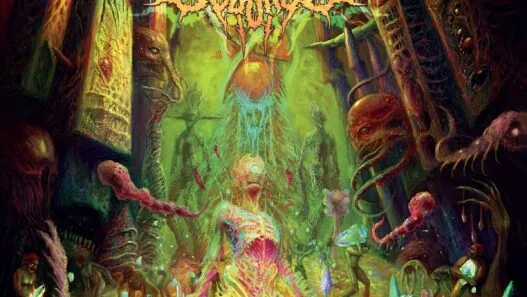
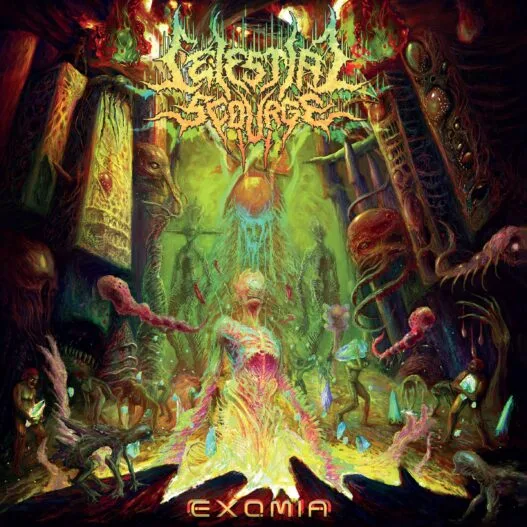
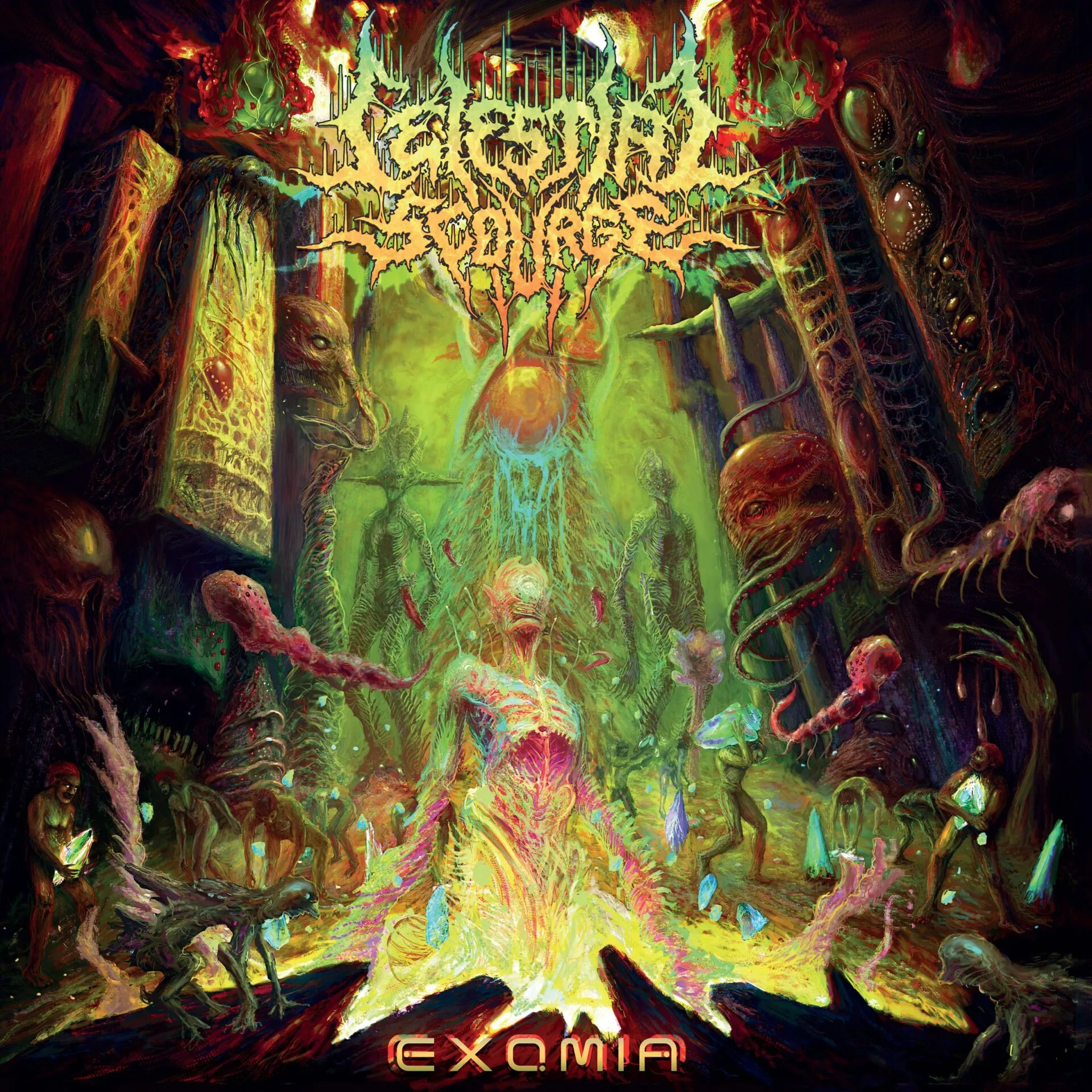
La premisa narrativa funciona como un amplificador de esa tensión estilística. Si su ópera prima planteaba el observatorio ante lo inevitable, «Exomia» retoma el hilo desde una perspectiva más asfixiante y sombría: el éxodo de la humanidad desde una Tierra agotada hacia un mundo exterior que, desde la órbita, aparenta ser un páramo yermo y silencioso, pero que revela una hostilidad orgánica y latente en cuanto la nave toca superficie. En la música extrema, la ciencia ficción suele caer en dos extremos igual de predecibles: el esteticismo aséptico de sintetizadores espaciales o la ilustración literal de asteroides y naves. Aquí, la frialdad espacial no se traduce en teclados atmosféricos ni en alardes prog etéreos, sino en una arquitectura rítmica compacta, en la sensación de presión atmosférica desmedida y en la fricción constante entre intervalos disonantes y golpes secos de percusión. Es un enfoque más cercano a la claustrofobia de una cabina despresurizada que a la contemplación estelar.
En el plano sonoro, el trabajo de producción es uno de los argumentos más sólidos del disco. La batería de Kristoffer Lunden, registrada en Bridge Burner Recording bajo la ingeniería de Ørjan Kristoffersen, suena seca, articulada y con un ataque de bombo y caja que prioriza la definición transitoria frente al empaste artificial. No hay un colchón de reverb que emborrone los redobles ni un exceso de trigger plastificado que convierta cada golpe en un disparo idéntico; se percibe el rebote natural del parche y la respiración de los platos en los pasajes más abiertos. Sobre esa base, el registro de Sindre Wathne Johnsen y Hans Jakob Bjørheim en las guitarras y el propio Stian Gundersen en el bajo -grabados por Sindre y Hansi– se articula mediante un engranaje donde los riffs no se limitan a duplicarse al unísono, sino que se encajan como piezas de maquinaria con tolerancias mínimas. El bajo no actúa como simple refuerzo grave: su presencia en los medios graves aporta un gruñido rugoso que amarra los cambios de compás cuando las guitarras se disparan hacia figuras cromáticas o arpegios quebrados.
La mezcla y masterización a cargo de Stefano Morabito en 16th Cellar Studio -un nombre con un historial extenso en producciones de metal extremo europeo- consolida esa claridad arquitectónica. Morabito mantiene los graves contenidos y controlados mediante una compresión multibanda quirúrgica, evitando que el espectro inferior se desborde durante las ráfagas de blast beat o los breakdowns más lentos, mientras deja espacio suficiente para que las frecuencias medias altas de las guitarras muerdan sin generar fatiga auditiva inmediata. Sin embargo, esa misma nitidez quirúrgica expone ocasionalmente el costado más previsible del álbum: cuando la mezcla es tan limpia y calculada, los momentos en los que la canción busca una suciedad más primitiva pierden algo de peligro espontáneo, como si cada sacudida estuviera cronometrada de antemano.
Ese equilibrio entre cálculo y golpe directo se aprecia con claridad en el arranque del álbum. «Welcoming the Wretched» abre la compuerta con un pulso decidido, alternando riffs entrecortados con un avance rítmico que no se recrea en adornos gratuitos; funciona como una declaración de intenciones sobre el nuevo rumbo compositivo: menos divagación ornamental y mayor economía de impacto. A continuación, «Foreseen Systematic Malfunctions» traduce el título a través de giros rítmicos asimétricos y frenadas en seco que sugieren un fallo de cálculo en pleno descenso, jugando con contrastes entre líneas de guitarra más agudas y un groove pesado que sostiene la tensión.
En la parte central del recorrido, el disco despliega su cara más densa y corrosiva. «The Merciless Conflagration» eleva la temperatura con una sucesión de riffs abrasivos y una batería que alterna aceleraciones implacables con pasajes de marcha pesada, mientras «Enshrined in Putrefying Flesh» introduce una cadencia más pútrida y opresiva, apoyada en intervalos graves que refuerzan la imaginería de descomposición y amenaza biológica en el nuevo planeta. «Nebulous Malediction» mantiene esa atmósfera espesa, jugando con dinámicas de sombra donde las guitarras tejen figuras enrevesadas antes de volver a compactar el bloque rítmico.
El punto de inflexión más evidente en términos de contraste vocal llega con «Spherical Aberrations», donde participa como invitado Devin Swank, vocalista de Sanguisugabogg. En un registro dominado por el gutural cavernoso y rasgado de Eirik Waadeland -que mantiene un tono constante, denso y de clara proyección frontal-, la irrupción de Swank en el tramo de breakdown añade una capa de gravedad visceral y pesadez de alcantarilla que rompe momentáneamente la frialdad más clínica del entorno. Es un recurso efectivo por contraste, aunque también pone en evidencia un aspecto de la escritura general del álbum: el breakdown funciona bien como descarga física inmediata, pero en ocasiones llega mediante una resolución rítmica algo reconocible dentro del canon moderno del género.
«Colossal Maleficent Solar Winds» recupera la amplitud cataclísmica con un despliegue de guitarras que alterna trémolos tensos y pasajes rítmicos de gran peso, preparando el cierre bipartito del álbum. Tanto «Exomia I» como «Exomia II (The Evacuation)» funcionan como el epílogo natural de la travesía: el primero opera como transición cargada de tensión estructural, preparando el terreno para «Exomia II (The Evacuation)», donde el disco reúne sus mejores bazas, dinámica entre pasajes rápidos y densos, precisión en los cortes conjuntos y un cierre que subraya la sensación de huida sin retorno.
Ahora bien, conviene mirar «Exomia» a contraluz de lo que suele celebrarse en este tipo de lanzamientos promocionales. En las notas y en el discurso habitual en torno al technical death metal de nueva hornada se suele elogiar sin matices la «accesibilidad» o la «inmediatez» cuando una banda reduce el virtuosismo gratuito en favor de riffs más directos. Desde mi perspectiva, esa mayor inmediatez es un acierto en términos de fluidez y retención -el disco se escucha con mayor cohesión y menos sensación de ejercicio académico que otros trabajos del estilo-, pero también conlleva un peaje: en varios tramos, la estructura de las canciones se apoya en fórmulas de alternancia entre riff técnico, pasaje a medio tiempo y golpe rítmico que ya hemos visto repetidas con frecuencia en la escena actual. La personalidad del grupo reside más en su cohesión de conjunto y en la experiencia de sus integrantes -con trayectorias vinculadas a proyectos del underground noruego como Blood Red Throne, Deception, Ruun, Vorbid o Todesking– que en una ruptura radical del lenguaje del género.
¿Por qué, entonces, detener la balanza en un 7,4 sobre 10 y no subir más arriba ni hundir el disco? Porque «Exomia» cumple con solvencia en aquello que promete: es un álbum sólido, bien tocado, con una producción de alto nivel y una narrativa coherente de principio a fin. Sin embargo, le falta ese último grado de identidad inconfundible que separa a un buen disco de metal técnico de una obra verdaderamente imprescindible. Hay pasajes donde el riff apunta alto y la rítmica golpea con autoridad, pero también momentos en los que la composición opta por una ruta segura dentro del manual contemporáneo, restándole filo imprevisible.
Calificación: 7,4 / 10
En definitiva, «Exomia» confirma a Celestial Scourge como una formación madura, precisa y comprometida con llevar su relato de ciencia ficción oscura hacia un terreno más directo y compacto. No reinventa las leyes físicas del technical death metal, pero sí demuestra que, cuando la arquitectura sonora está bien calibrada, la gravedad del conjunto pesa más que la acumulación de notas.
Tracklist
«Welcoming the Wretched»
«Foreseen Systematic Malfunctions»
«The Merciless Conflagration»
«Enshrined in Putrefying Flesh»
«Nebulous Malediction»
«Spherical Aberrations» (feat. Devin Swank of Sanguisugabogg)
«Colossal Maleficent Solar Winds»
«Exomia I»
«Exomia II (The Evacuation)»
Formación
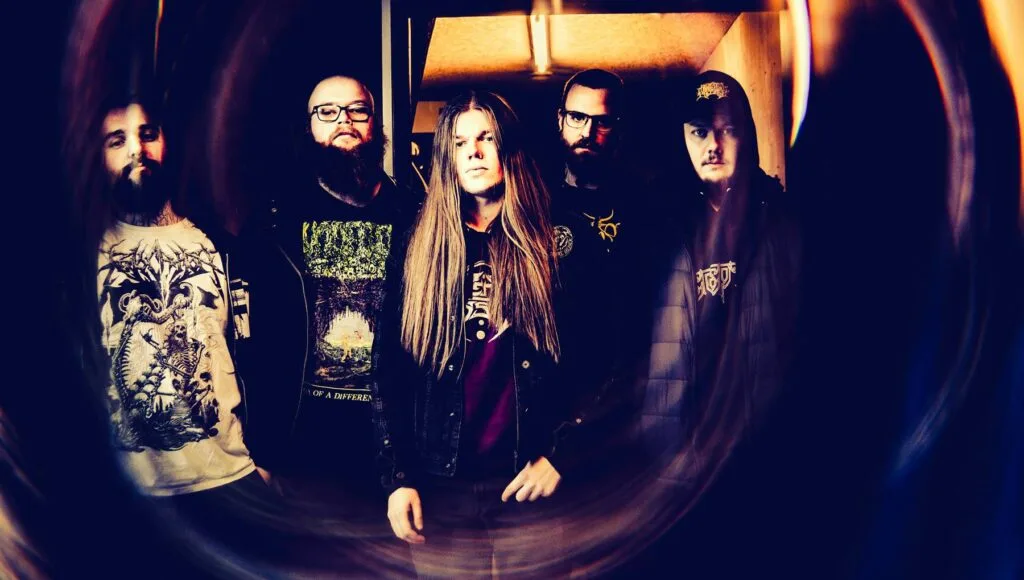
Kristoffer Lunden – Batería
Sindre Wathne Johnsen – Guitarra
Hans Jakob Bjørheim – Guitarra
Stian Gundersen – Bajo
Eirik Waadeland – Voz
Colaboración especial: Devin Swank (Sanguisugabogg) – Voces adicionales en «Spherical Aberrations»
Multimedia
Redes Sociales
- Bandcamp: https://celestialscourge.bandcamp.com/
- Instagram: https://www.instagram.com/celestial_scourge/
- Facebook: https://www.facebook.com/celestialscourge/
There is a recurring mirage in contemporary technical death metal: confusing event density per measure with actual density of gravity. Over the last fifteen years, dozens of bands have treated the fretboard like a spreadsheet where every note must justify its existence through an improbable string skip or an odd time signature displayed like a trophy. When the Norwegian project Celestial Scourge appeared on the radar with its debut, «Observers of the Inevitable«, it already pointed toward that intersection between geometric rigor and cosmic pessimism, yet with Exomia –released on November 20, 2026 via Time To Kill Records- the band founded in 2021 by bassist Stian Gundersen gives the screw another turn toward kinetic immediacy without abdicating its technical DNA. The proposition sits in a very specific territory: the collision between the cavernous weight of most orthodox nineties death metal and the angular, cold, and occasionally dissonant phrasing of the modern school.
The narrative premise works as an amplifier for that stylistic tension. If its debut set up the observatory facing the inevitable, «Exomia» picks up the thread from a more suffocating and somber perspective: humanity’s exodus from an exhausted Earth toward an outer world that, from orbit, appears to be a barren, silent wasteland, but reveals a latent, organic hostility as soon as the ship touches the surface. In extreme music, science fiction usually falls into two equally predictable extremes: the aseptic aestheticism of space synthesizers or the literal illustration of asteroids and starships. Here, spatial coldness does not translate into atmospheric keyboards or ethereal prog displays, but rather into a compact rhythmic architecture, the sensation of excessive atmospheric pressure, and constant friction between dissonant intervals and dry percussion hits. It is an approach closer to the claustrophobia of a depressurized cabin than to stellar contemplation.
On the sonic level, the production work is one of the record’s strongest arguments. The drums of Kristoffer Lunden, recorded at Bridge Burner Recording under the engineering of Ørjan Kristoffersen, sound dry, articulated, and with a kick and snare attack that prioritizes transient definition over artificial layering. There is no cushion of reverb blurring the rolls or excessive plastified triggering turning every hit into an identical shot; you can perceive the natural rebound of the drumhead and the breathing of the cymbals in the more open passages. Over that foundation, the tracking of Sindre Wathne Johnsen and Hans Jakob Bjørheim on guitars and Stian Gundersen himself on bass -recorded by Sindre and Hansi- is articulated through a mechanism where riffs do not simply double in unison, but lock together like machinery parts with minimal tolerances. The bass does not act as mere low-end reinforcement: its presence in the low mids brings a rough growl that anchors time signature changes when the guitars shoot off toward chromatic figures or broken arpeggios.
Mixing and mastering by Stefano Morabito at 16th Cellar Studio -a name with an extensive track record in European extreme metal productions- consolidates that architectural clarity. Morabito keeps the low end contained and controlled through surgical multiband compression, preventing the lower spectrum from overflowing during blast-beat bursts or slower breakdowns, while leaving enough room for the upper-mid frequencies of the guitars to bite without causing immediate ear fatigue. However, that same surgical sharpness occasionally exposes the album’s more predictable side: when the mix is so clean and calculated, the moments when a song seeks a more primitive dirtiness lose some spontaneous danger, as if every jolt were timed in advance.
That balance between calculation and direct impact is clearly visible at the start of the album. «Welcoming the Wretched» opens the floodgates with a decisive pulse, alternating staccato riffs with a rhythmic drive that does not linger on gratuitous embellishments; it works as a statement of intent regarding the new songwriting direction: less ornamental meandering and greater economy of impact. Next, «Foreseen Systematic Malfunctions» translates its title through asymmetrical rhythmic turns and sudden stops that suggest a miscalculation mid-descent, playing with contrasts between higher-pitched guitar lines and a heavy groove that sustains the tension.
In the middle stretch of the journey, the record unfolds its denser, more corrosive side. «The Merciless Conflagration» raises the temperature with a succession of abrasive riffs and drumming that alternates relentless accelerations with heavy-marching passages, while «Enshrined in Putrefying Flesh» introduces a more putrid, oppressive cadence, supported by low intervals that reinforce the imagery of decomposition and biological threat on the new planet. «Nebulous Malediction» maintains that thick atmosphere, playing with shadowy dynamics where the guitars weave intricate figures before compacting the rhythmic block once again.
The clearest turning point in terms of vocal contrast arrives with «Spherical Aberrations», featuring guest Devin Swank, vocalist of Sanguisugabogg. In a register dominated by the cavernous, raspy gutturals of Eirik Waadeland –who maintains a steady, dense tone with clear front-facing projection- Swank‘s irruption in the breakdown section adds a layer of visceral gravity and sewer-like heaviness that momentarily breaks the more clinical coldness of the setting. It is an effective device through contrast, though it also highlights an aspect of the album’s overall writing: the breakdown works well as an immediate physical release, yet at times arrives via a rhythmic resolution somewhat recognizable within the modern canon of the genre.
«Colossal Maleficent Solar Winds» recovers cataclysmic breadth with a guitar display that alternates tense tremolos and heavy rhythmic passages, setting up the bipartite closing of the album. Both «Exomia I» and «Exomia II (The Evacuation)» work as the natural epilogue to the voyage: the former operates as a transition charged with structural tension, paving the way for «Exomia II (The Evacuation)», where the record brings together its best assets—dynamics between fast and dense passages, precision in joint cutoffs, and a closer that underscores the sensation of a flight of no return.
That said, it is worth looking at Exomia against the grain of what is usually celebrated in this kind of promotional release. In press notes and the customary discourse around newer-wave technical death metal, «accessibility» or «immediacy» is often praised without nuance when a band reduces gratuitous virtuosity in favor of more direct riffs. From my perspective, that greater immediacy is a success in terms of flow and retention—the record listens with stronger cohesion and less feeling of an academic exercise than other works in the style—but it also carries a toll: in several stretches, song structure relies on formulas alternating a technical riff, a mid-tempo passage, and a rhythmic hit that we have already seen repeated frequently in the current scene. The group’s personality lies more in its ensemble cohesion and its members’ experience—with backgrounds tied to Norwegian underground projects such as Blood Red Throne, Deception, Ruun, Vorbid, or Todesking—than in a radical rupture of the genre’s language.
Why, then, stop the scale at 7.4 out of 10 rather than climbing higher or sinking the record? Because «Exomia» delivers solidly on what it promises: it is a tight, well-played album with top-tier production and a coherent narrative from start to finish. However, it lacks that final degree of unmistakable identity that separates a good technical metal record from a truly essential work. There are passages where the riff aims high and the rhythm section hits with authority, yet also moments where the songwriting opts for a safe route within the contemporary playbook, trimming away unpredictable edge.
Rating: 7.4 / 10
All in all, «Exomia» confirms Celestial Scourge as a mature, precise outfit committed to taking its dark science-fiction tale toward more direct, compact ground. It does not reinvent the physical laws of technical death metal, but it does show that when sonic architecture is well calibrated, the gravity of the whole outweighs the accumulation of notes.